
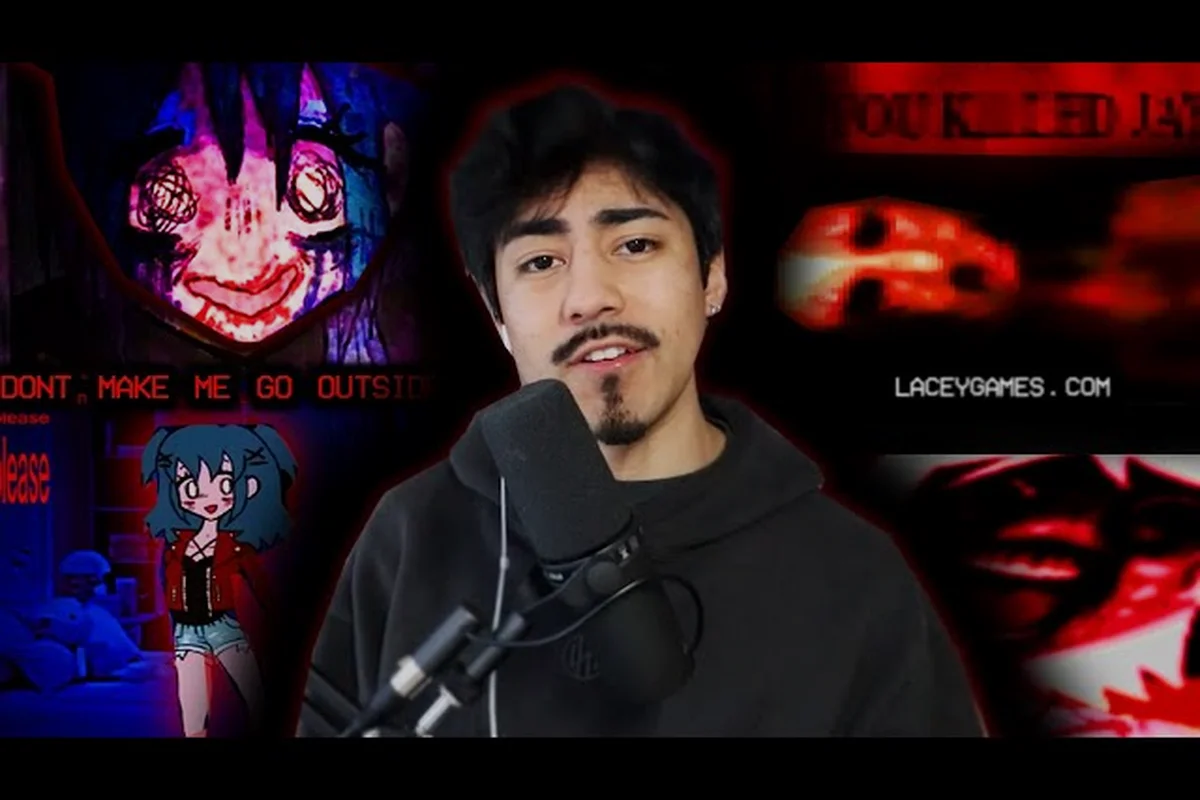
The name Rocio Yani sits at the center of the biggest unanswered question in Lacey's Flash Games: who actually built these cursed little browser titles, and why did she vanish? If you have finished the series and still feel like the credits are hiding something, you are not alone — the mystery of the missing creator is one of the most discussed threads in the community.
This breakdown walks through every scrap of evidence the game gives you about Rocio Yani, separates confirmed details from fan speculation, and explains how her story connects to Grace, the narrator, and the unsettling meta-narrative that ties the whole collection together.
Who Is Rocio Yani in Lacey's Flash Games?
Rocio Yani is presented as the fictional developer behind the Lacey's Flash Games collection — the person whose name appears on the in-game credits and whose absence becomes a plot point rather than a footnote. Within the game's fiction, she is the creator who built the original Lacey titles, then disappeared under circumstances the narrative never fully explains.
That framing matters because the series is an analog horror experience dressed up as a nostalgic Flash game archive. The "developer" is a character, and her disappearance is a deliberate narrative device. According to community reports, players who dig into the credits and menu screens find that Rocio's name is treated with the same eerie ambiguity as the rest of the game's lore.
Here is how the key figures in this story relate to one another: the table below maps each name to its narrative function, and the relationships are deliberately lopsided. Rocio Yani sits at the top as the credited creator of the Lacey titles but is marked missing, meaning the one figure with authority over the games never appears on screen. Grace functions as narrator and the central unsettling presence, so the voice guiding you through the archive is also the source of unease. Lacey is the playable protagonist of the Flash titles, while the player is framed as someone recovering the lost games — a role that turns browsing the menu into an act of investigation. Notice that Rocio's absence is what connects the other three: Grace narrates, Lacey is played, and you recover, all within a fiction built around a developer who cannot be found.
| Figure | Role in the Lore | Status |
|---|---|---|
| Rocio Yani | Credited creator of the Lacey titles | Missing / unaccounted for |
| Grace | Narrator and central unsettling presence | Active in the story |
| Lacey | The in-game protagonist of the Flash titles | Playable character |
| The player | Someone "recovering" the lost games | Framing device |
The important takeaway is that Rocio Yani is not a real-world developer you can look up — she is a constructed persona. Any search for her real identity leads back into the fiction, which is exactly the point. The game wants you to feel like you are piecing together a real disappearance.
The Credited Creator and the Framing Device
The whole collection is framed as recovered media. You are not simply playing a game; you are supposedly exploring an archive of Flash titles left behind by someone who is no longer around. Rocio Yani's name on those credits is the anchor that makes the framing feel real.
This is a common technique in analog horror, but Lacey's Flash Games leans into it harder than most. The missing creator angle turns every menu screen and credit roll into evidence. When players ask what happened to the creator, they are engaging with the story exactly as intended.
Lacey's Flash Games Rocio Yani Explained: The Disappearance
The disappearance is never shown directly. Instead, it is assembled from implication — a name that stops appearing, a tone shift in the later entries, and the growing sense that something went wrong behind the scenes of the fiction. Understanding the mystery means reading between the lines rather than waiting for an explicit answer.
Community discussion tends to converge on a few interpretations, and each one changes how you read the series: whether you treat the vanishing as an abandonment of the Lacey's Flash Games project, a victim narrative where something in the games "got to" Rocio Yani, or an unreliable-narrator trick filtered through Grace's telling, the same sparse clues — the dropped name, the tonal shift in later entries, the missing-creator framing — get recast in a different light. That is why "who is Rocio Yani" stays unresolved: the evidence is thin enough that the reading you bring determines the answer you find.
-
The abandonment reading: Rocio simply stopped making the games, and the horror is the emptiness she left behind.
-
The victim reading: Something in the games "got to" Rocio, and her disappearance is a warning to the player.
-
The unreliable-narrator reading: Grace is telling the story, so Rocio's fate may be distorted or invented entirely.
None of these are confirmed by the game, and that ambiguity is the engine of the whole mystery. The narrative gives you enough to form a theory but never enough to close the case. Notice how the dropped name functions as a structural clue rather than a plot event: Rocio Yani's credit simply ceases across later installments, with no death scene, no farewell entry, and no in-game explanation for the missing-creator framing. Because the series is delivered through Grace's retelling, every gap doubles as potential evidence — the tonal shift in later entries could be grief, fabrication, or a deliberate unreliable-narrator device. That scarcity is why "who is Rocio Yani" resists a canonical answer: the game supplies implication, not testimony, so each reading of the disappearance fills the silence differently.
Why the Mystery Is Never Resolved
Analog horror thrives on unresolved questions, and the fate of Rocio Yani is the series' biggest open loop. If the game told you exactly what happened, the tension would collapse. By leaving her fate blank, the creators keep players theorizing long after the credits roll.
That design choice is why the "what happened to the creator" question persists in every discussion thread. The absence is the content. For a closer look at how the narrator shapes that ambiguity, the breakdown of Grace as the narrator explains how her voice colors every piece of information you receive.
Rocio Yani and Grace: How the Two Stories Connect
The link between Rocio Yani and Grace is where the lore gets genuinely unsettling. Grace is not just a narrator — she is a presence with her own agenda, and the way she talks about the games suggests she knows more about Rocio's fate than she lets on. Players who ask who Grace is quickly realize the two mysteries are braided together.
The connection works like this: Rocio built the games, and Grace is the voice that survived inside them. Whether Grace is a character Rocio created, a presence that attached itself to the work, or something else entirely is left open. What matters is that Grace's narration is the primary lens through which you learn about Rocio, which means every fact about the missing creator is filtered through a potentially unreliable source.
| Question | What the Game Suggests | What Remains Unclear |
|---|---|---|
| Did Rocio create Grace? | Grace speaks as if she belongs to the games | Whether she predates Rocio's work |
| Is Grace telling the truth? | Her tone shifts and contradicts itself | Her actual motive |
| Did Grace cause the disappearance? | Implied by her unsettling control | Never confirmed |
| Is Rocio still "in" the games? | The archive framing hints at it | No direct evidence |
This is why the "who is Grace" question and the "who is Rocio Yani" question cannot really be separated. They are two halves of the same mystery, and the game deliberately refuses to let you solve one without the other.
Reading Grace as an Unreliable Source
If you accept that Grace may be manipulating the narrative, then everything you "know" about Rocio Yani becomes suspect. Her credited role, her disappearance, even her name could be details Grace chose to preserve or distort. That reading makes a second playthrough far more interesting, because you start noticing where the narration hesitates or over-explains.
The full cast breakdown in the narrator characters guide maps out how Grace, Rocio, and the player character fit together, which helps you track who is actually speaking at any given moment.
What Happened to the Creator? Evaluating the Main Theories
When players ask what happened to Rocio Yani, they are really asking which theory best fits the evidence. No interpretation is officially confirmed, but some are better supported than others. The table below ranks the leading theories by how much in-game material backs them up.
| Theory | Supporting Evidence | Weakness |
|---|---|---|
| Rocio abandoned the project | Archive framing, abrupt tone shift | Doesn't explain Grace's control |
| Rocio was "absorbed" by the games | Recurring meta-horror imagery | Purely interpretive |
| Grace erased or replaced her | Narrator's dominance over the story | No direct confirmation |
| Rocio never existed in-world | Credits feel deliberately staged | Undercuts the emotional weight |
The strongest reading combines the first and third: Rocio genuinely created the games, then lost control of them to whatever Grace represents, and her disappearance is the result of that loss. This interpretation respects both the archive framing and Grace's unsettling authority, which is why it shows up most often in community discussion.
How to Spot the Clues Yourself
The evidence for Rocio's fate is scattered across menus, credits, and subtle shifts in tone rather than delivered in a cutscene. To catch it, slow down and pay attention to the moments that feel slightly "off" — a name that appears where it shouldn't, a line of narration that contradicts an earlier one, a credit roll that lingers a beat too long.
A structured first run helps here. Working through the first playthrough guide gives you a clean baseline, so on a second run you can notice exactly which details changed or disappeared. That contrast is where the Rocio Yani mystery really comes alive.
Why the Missing Creator Matters to the Whole Series
The Rocio Yani thread is not a side detail — it is the spine of the entire narrative. Without a missing creator, Lacey's Flash Games would be a collection of creepy mini-games. With her, it becomes a story about loss, obsession, and what gets left behind when a creator disappears into their own work.
That theme is what elevates the series above typical analog horror. The games themselves are simple, but the framing — an archive of someone's life's work, recovered by you — gives every click a sense of trespass. You are not just playing; you are intruding on something someone left unfinished.
| Lore Element | Surface Meaning | Deeper Implication |
|---|---|---|
| The credits | A developer's name | A person who is gone |
| The archive framing | Nostalgic presentation | A warning about what you're opening |
| Grace's narration | A guide through the games | A presence with its own goals |
| The unresolved ending | Ambiguous horror | The point of the whole story |
Understanding this layer changes how you experience the series. The jump scares and eerie visuals are the surface; the missing creator is the emotional core underneath. For players who want to chase the full picture, the completion guide covers the endings and hidden content that tie the Rocio thread together.
Rocio Yani as a Commentary on Lost Media
Part of why the Rocio Yani mystery resonates is that it mirrors real conversations about lost media and vanished Flash game creators. The series borrows that genuine unease — the feeling that something you loved was made by someone you'll never know — and turns it into horror.
That is the smartest move in the whole design. The fiction feels plausible because the real world is full of abandoned games and anonymous developers. Rocio Yani is a fictional stand-in for all of them, and her disappearance hits harder because it echoes something true.
Frequently Asked Questions
Who is Rocio Yani in Lacey's Flash Games?
Rocio Yani is the fictional developer credited with creating the Lacey titles within the game's story. She is not a real person you can look up — she is a narrative device whose disappearance drives the mystery. Her name appears on in-game credits and becomes central to the analog horror framing.
What happened to Rocio Yani in the lore?
The game never states it directly. Community theories suggest she either abandoned the project, was absorbed into the games, or was erased by Grace's influence. The ambiguity is intentional, and no interpretation has been officially confirmed by the developers.
Is Grace connected to Rocio Yani's disappearance?
Strongly implied but never proven. Grace narrates the story and controls much of what you learn, which makes her a suspect in Rocio's fate. Whether she caused the disappearance or simply knows about it remains one of the series' biggest open questions.
Is Rocio Yani a real game developer?
No. She is a fictional character created for the game's meta-narrative, and the in-game credits that list her name are props rather than records of a real developer. Searching for her real identity leads back into the fiction — forum threads, wiki entries, and "found footage" clips all trace to the same fabricated source — which is exactly the effect the developers intended when they built the missing-creator storyline around Lacey and Grace.
Do I need to understand the Rocio lore to enjoy the games?
Not to play them, but the lore is what makes the series memorable. Knowing about the missing creator turns simple Flash-style games into a layered horror experience, and it makes a second playthrough far more rewarding. Once you know Rocio Yani is the credited name behind the Lacey titles, the in-game credits stop reading like a formality and start reading like evidence: every mention of her becomes a clue, every contradiction in Grace's narration becomes a question worth chasing, and the analog horror framing gains a human absence at its center rather than a generic monster. That shift is why replaying with the Rocio Yani mystery in mind reveals details — credit screens, wiki-style entries, found-footage clips — that a first run glosses over entirely.
The mystery of Rocio Yani works because it refuses to resolve. She is the credited creator who vanished, the name on the credits that becomes a question mark, and the thread that ties Lacey, Grace, and the player together into one unsettling story. Treat the credits as evidence, watch for contradictions in Grace's narration, and let the ambiguity do its job — that is how the missing creator of Lacey's Flash Games is meant to be experienced.