
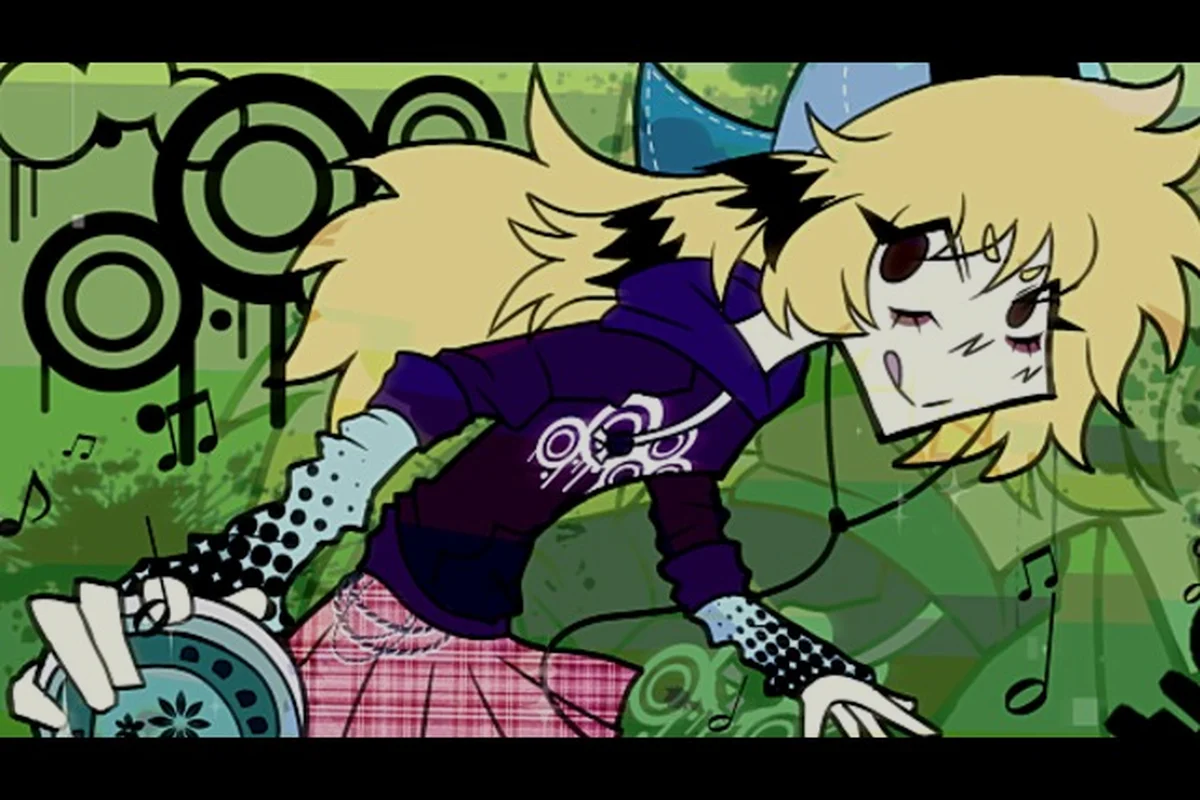
The narrator characters in Lacey's Flash Games carry the entire story, and figuring out who is actually speaking is half the puzzle. This breakdown maps every voice you hear — Grace, Rocio Yani, Charlie, and the player — so the cast stops being a mystery.
The game never hands you a clean cast list. Instead, it layers text boxes, distorted audio, and shifting names on top of each other, which means the narrator characters in Lacey's Flash Games are doing double duty as both storytellers and clues. If you have ever finished a session unsure whether the voice belonged to Lacey, Grace, or something pretending to be one of them, you are not alone — that confusion is intentional, and it is the engine behind the whole analog horror experience.
What follows is a practical cast guide. It separates the four voices that matter, explains how each one sounds and what each one wants, and points out the moments where the narration quietly changes hands. By the end you should be able to hear a line and place it instantly.
Who the Lacey's Flash Games Narrator Characters Actually Are
The short answer is that four distinct voices drive the narrative: Grace, Rocio Yani, Charlie, and the player character. Each one occupies a different layer of the game — some speak through dialogue boxes, some through corrupted text, and one through the simple act of you clicking forward. Understanding that layering is the key to reading the story correctly.
Community players have spent a lot of time cataloguing these voices, and the consensus is that the game deliberately blurs the line between who is narrating and who is being narrated about. A line that sounds like an omniscient narrator in one scene can turn out to be a character's memory in the next.
Here is the quick reference before we go deeper: the table below sorts all five narrator characters — Grace, Rocio Yani, Rocio, Charlie, and the silent player character — by their role in the story, how they speak (calm and direct, fragmented and archival, casual and conversational, nervous and reactive, or wordless), and their reliability rating. Notice that Grace, the calm guide figure, carries the lowest reliability score because she hides things, while Charlie's nervous witness account ranks highest despite being easily misled. Keep that reliability column in mind as you read, since it maps directly onto which narrator's version of events the game wants you to doubt.
| Narrator | Role in the story | How they speak | Reliability |
|---|---|---|---|
| Grace | Central voice, guide figure | Calm, direct, sometimes glitched | Low — hides things |
| Rocio Yani | Missing creator presence | Fragmented, archival | Medium — factual but incomplete |
| Rocio | In-world character voice | Casual, conversational | Medium — limited perspective |
| Charlie | Secondary narrator / witness | Nervous, reactive | High — but easily misled |
| Player character | Silent protagonist | No voice, only actions | N/A — you decide |
The table already reveals the core tension: Grace, the calm guide figure, carries the lowest reliability score, while Charlie's nervous witness account ranks highest despite being easily misled. That inversion is deliberate design, not an accident of writing. Grace's glitched dialogue boxes and direct, reassuring tone are exactly what make her omissions harder to catch — the player trusts her cadence before questioning her content. Charlie, by contrast, speaks in fragmented, reactive bursts that flag his own uncertainty, so his account reads as honest even when it's wrong. Reading the cast this way turns the narrator characters into a reliability puzzle rather than a roster to memorize.
Why Name Reuse Makes the Cast Feel Bigger
Because the game reuses names across contexts. The Rocio Yani credit and the Rocio character are related but not identical in function, and the game leans on that ambiguity. When a text box says "Rocio," you have to decide from context whether it means the creator behind the files or the friend inside the story.
That single naming decision generates most of the fan theories, and it is why a straightforward cast list never quite satisfies anyone. The narrator characters in Lacey's Flash Games are less a roster and more a set of masks the story keeps swapping.
Grace: The Voice That Sounds Like a Guide
Grace is the first narrator most players meet, and she is designed to feel helpful. Her lines are short, calm, and reassuring, which is exactly why she becomes unsettling once you notice how often she avoids direct answers. She narrates transitions, explains mechanics, and nudges you forward — all while withholding the one piece of information that would resolve the plot.
The Lacey's Flash Games Grace character is best understood as a filter. She does not invent events so much as curate them, choosing which memories you are allowed to see. When her text starts to stutter or repeat, that is the game telling you the filter is slipping.
A few behavioral markers separate Grace's narration from everyone else's: her consistent second-person address keeps you as the grammatical subject even when she describes events she witnessed, her deliberate omissions cluster around the night of the incident so that key Lacey's Flash Games plot beats arrive from other narrators instead, and her glitch punctuation — doubled letters, severed words like "remem—" — spikes precisely when a question gets too close to that gap.
-
Consistent second-person address — she talks to you, not about herself.
-
Deliberate omissions — she skips the moments that would incriminate her.
-
Glitch punctuation — repeated characters and broken words appear when she is stressed.
-
Soft tonal shifts — her calm never breaks, even when the content turns violent.
That last point is the tell. A narrator whose voice never changes while describing something horrifying is a narrator with something to protect. Players who dig into Grace's role as narrator tend to land on the same conclusion: she is not lying outright, she is editing.
How to tell Grace apart from Lacey
This trips up almost everyone. Lacey is the protagonist you control; Grace is the voice that frames her. When a line uses "I" and describes feelings, it is usually Lacey's internal monologue. When a line uses "you" and describes instructions or warnings, it is Grace. The pronoun is the fastest diagnostic tool in the game.
Rocio Yani and Rocio: Two Names, Two Functions
The most confusing pair in the cast is Rocio Yani and Rocio. They share a first name, but they operate on different levels of the story. Rocio Yani is tied to the creation of the files themselves — the archival, behind-the-scenes presence whose name shows up in credits, metadata, and corrupted headers. Rocio is the in-world friend, the one who exists inside the narrative and interacts with Lacey directly.
The Lacey's Flash Games Rocio Yani character functions as an authorial ghost. She does not speak in scenes so much as leave traces: a filename, a timestamp, a fragment of text that does not belong to any conversation. Community reports describe her presence as "the feeling that someone made this and then disappeared," which is a fair summary of how her narration works.
The Lacey's Flash Games Rocio character, by contrast, is warmer and more ordinary. She talks like a friend, jokes, and reacts. That ordinariness is what makes her useful — she grounds the story so the weirdness has something to contrast against.
| Trait | Rocio Yani | Rocio |
|---|---|---|
| Narrative layer | Meta / archival | In-world / social |
| Speaking style | Fragmented, technical | Conversational, emotional |
| Where she appears | Credits, file names, glitch text | Dialogue scenes with Lacey |
| Story function | Explains the game's origin | Explains Lacey's relationships |
| Player takeaway | Something happened to the creator | Something happened to a friend |
The distinction matters because fans often merge the two and then get stuck. If you want the full timeline of the creator figure, the Rocio Yani story breakdown traces how the archival voice and the in-world voice diverge.
Reading the fragmented narration
When Rocio Yani "speaks," the text is rarely a clean sentence. Expect truncated words, mismatched fonts, and lines that cut off mid-thought. This is not random noise — the fragments tend to cluster around specific topics, usually the moment the files were created. Treat her narration as evidence rather than dialogue, and the pieces start to line up.
Charlie: The Witness Who Cannot Lie
Charlie occupies a different slot entirely. Where Grace curates and Rocio Yani haunts, the Lacey's Flash Games Charlie character simply reports. Charlie's narration is reactive — nervous, quick, and full of small corrections. He is the voice that says "wait, that's not what happened" and then explains what he saw.
That makes Charlie the most reliable narrator in the cast, with one important caveat: he is easy to mislead. Charlie reports what he believes, and what he believes is shaped by whoever spoke to him last. So his lines are accurate about his own experience and unreliable about the wider truth.
Players often use Charlie as a calibration point. If Charlie's account contradicts Grace's, the contradiction itself is information — it tells you Grace skipped something. If Charlie's account contradicts Rocio Yani's fragments, you are usually looking at a timeline problem rather than a lie.
Charlie's role in the player's understanding
Charlie is the narrator who makes the story legible. Without him, the cast would be an unreadable pile of unreliable voices. He provides the baseline that lets you measure everyone else's distortions, which is why his scenes tend to appear right before a major reveal.
The Player Character and the Protagonist Problem
The Lacey's Flash Games player character never speaks. You click, you choose, you move forward, and the game narrates around you. That silence is a design choice, not an oversight — it turns the player into a narrator by omission, because the story only advances when you decide to advance it.
This creates an unusual dynamic. The Lacey's Flash Games protagonist, Lacey, is a defined character with a history and a personality, but she is also the vessel you steer. The game exploits that gap. Some scenes address Lacey directly; others address you. Learning to feel the difference is the single biggest readability upgrade you can make.
| Moment type | Who is being addressed | Clue to watch for |
|---|---|---|
| Instructional text | You, the player | Second person, mechanical tone |
| Emotional monologue | Lacey | First person, personal detail |
| Warnings | Ambiguous — often both | Direct address plus story context |
| Endings | Lacey, framed by Grace | Resolution language, finality |
The ambiguity in that third row is deliberate, and it is where the Lacey's Flash Games narrator characters do their most unsettling work. A warning like "don't look behind you" reads as story dialogue if Lacey is the target, but as a mechanical instruction if you are — and the game rarely signals which. That overlap is the point: by refusing to clarify whether a warning is aimed at the character or the person holding the mouse, the game collapses the gap between Lacey's Flash Games protagonist and Lacey's Flash Games player character at the exact moment you least want them merged. Watch the phrasing instead of the tone — warnings that name a room, object, or action inside the story belong to Lacey, while warnings that describe your cursor, your click, or your screen belong to you. When a line does both at once, treat it as aimed at you; that reading keeps you alert through scenes where Lacey's Flash Games grace character or Lacey's Flash Games rocio character would otherwise absorb all your attention.
Why the silent protagonist works here
A talking protagonist would break the horror. The whole premise depends on you not knowing more than Lacey knows, and on Lacey not knowing more than Grace allows. Silence keeps both of you in the dark, which is exactly where the story wants its audience. If you want to dig into how Lacey is characterized despite that silence, the main character analysis covers her design and relationships in detail.
Matching Voices to Scenes: A Practical Method
Once you know the four narrators, the next step is applying that knowledge while you play. The method below is what most experienced players do instinctively, and it can be learned in a single session. It works because the four voices rarely overlap: Grace's calm instructional tone, Lacey's first-person memories, Charlie's rapid corrective reports, and Rocio Yani's pronoun-free fragments each leave a distinct fingerprint. Run the checks in the order below rather than jumping straight to content, since pronoun and formatting resolve the majority of lines before you even consider what is being said.
-
Check the pronoun first. "You" usually means Grace or the player layer. "I" usually means Lacey or Charlie. No pronoun at all often signals Rocio Yani's fragments.
-
Check the formatting second. Clean text with calm pacing is Grace. Broken text with odd spacing is archival. Rapid, corrective sentences are Charlie.
-
Check the content third. Instructions and nudges belong to Grace. Memories and feelings belong to Lacey. Reports of events belong to Charlie. File-level details belong to Rocio Yani.
-
Check the timing last. Narration that appears right before a reveal is usually a setup voice, and setup is Grace's specialty.
Running those four checks takes a few seconds and resolves most confusion. A good worked example is a line like "I remember the hallway the way it was before the fire" — the "I" points to Lacey or Charlie, the fragmented, pronoun-light phrasing leans toward Rocio Yani's archival fragments, and the memory content confirms Lacey, so you can settle it before the next reveal even loads. The remaining ambiguity is intentional: when a line still fits two narrators after all four checks, treat it as a deliberate clue about overlapping identities rather than a bug, and let the timing of the reveal tell you which voice the scene actually wants you to hear.
Common misreadings to avoid
-
Assuming Grace is the narrator of everything. She frames the story but does not own it.
-
Treating Rocio and Rocio Yani as one person. They share a name and nothing else.
-
Trusting Charlie's conclusions instead of his observations. He is honest, not omniscient.
-
Forgetting the player layer. Your clicks are part of the narration.
Each of those mistakes leads to a different wrong theory, and each is corrected by the same habit: ask who is speaking before asking what it means. Concretely, when a line seems to contradict earlier events, check the attribution first — a claim that reads as Grace's omniscient framing may actually be Charlie's honest-but-limited observation, or a Rocio Yani statement misread as coming from Rocio. Because the narrator characters in Lacey's Flash Games each carry a distinct scope of knowledge, misattributing a single line cascades into a whole false reading of the plot. Isolating the speaker — Grace, Rocio, Rocio Yani, Charlie, or the player layer — collapses most apparent contradictions before they ever become theories.
How the Cast Shapes the Story's Meaning
The reason the narrator characters in Lacey's Flash Games reward close attention is that the cast is the plot. There is no external villain explaining motives and no cutscene that resolves everything. Instead, the story is assembled from four partial accounts, and the truth lives in the gaps between them.
Grace gives you a curated version. Rocio Yani leaves evidence of what happened outside the story. Rocio shows you what the story felt like from inside. Charlie tells you what he saw and got wrong. The player supplies the momentum that keeps all of it moving. Remove any one voice and the structure collapses.
That is also why fan theories diverge so widely. Two players can watch the same scene and walk away with different conclusions because they weighted the narrators differently. Someone who trusts Grace sees a tragedy about protection. Someone who trusts Rocio Yani sees a story about disappearance. Someone who trusts Charlie sees a story about a witness who could not stop anything.
None of those readings is wrong, which is the point. The game is built so that the cast supports multiple interpretations, and the full character roster makes that multiplicity easier to see side by side.
What to watch for on a second playthrough
On a replay, stop listening to what the narrators say and start listening to when they stop talking. Grace goes quiet at specific moments. Rocio Yani's fragments cluster. Charlie's corrections arrive late. Those silences and delays are the real narrative, and they only become visible once you already know how the story ends.
Frequently Asked Questions
Who are the narrator characters in Lacey's Flash Games?
The narrator characters are Grace, Rocio Yani, Rocio, Charlie, and the silent player character. Grace frames the story, Rocio Yani leaves archival traces, Rocio speaks as an in-world friend, Charlie reports events as a witness, and the player drives the action forward without ever speaking a line.
Is Grace the same person as Lacey?
No. Lacey is the protagonist you control, while Grace is the voice that narrates and frames her story. The easiest way to separate them is pronoun usage: Grace typically addresses "you," while Lacey's internal monologue uses "I" and describes personal feelings rather than instructions.
Why do Rocio and Rocio Yani have the same name?
The shared name is a deliberate design choice that blurs two narrative layers. Rocio Yani belongs to the meta, archival level tied to the game's creation, while Rocio exists inside the story as Lacey's friend. The overlap is meant to confuse players and fuel interpretation.
Can the player character be considered a narrator?
Yes, in a structural sense. Because the story only advances when you click and choose, the player functions as a narrator through action rather than dialogue. The game exploits this by sometimes addressing Lacey and sometimes addressing you directly, blurring the line between character and audience.
Which narrator is the most reliable?
Charlie is generally the most reliable, since he reports what he actually witnessed rather than curating or hiding it. However, his accounts are limited by his perspective, so his observations are trustworthy while his conclusions can be wrong. Grace sounds reliable but deliberately omits key details.