The question of whether Lacey's Flash Games is an ARG keeps resurfacing because the game hides its strangest material in plain sight, and the answer changes how you read every screen. If you have ever finished a level and felt something was watching, this breakdown of the hidden meaning is for you.
What an ARG Is and Why This Game Fits the Label
An alternate reality game blurs the line between fiction and the real world: developers plant clues outside the game, players decode them together, and the story continues in places that are not supposed to be part of the product. The Lacey's Flash Games ARG theory rests on exactly that pattern, because several elements of the game behave like puzzle pieces rather than decoration.
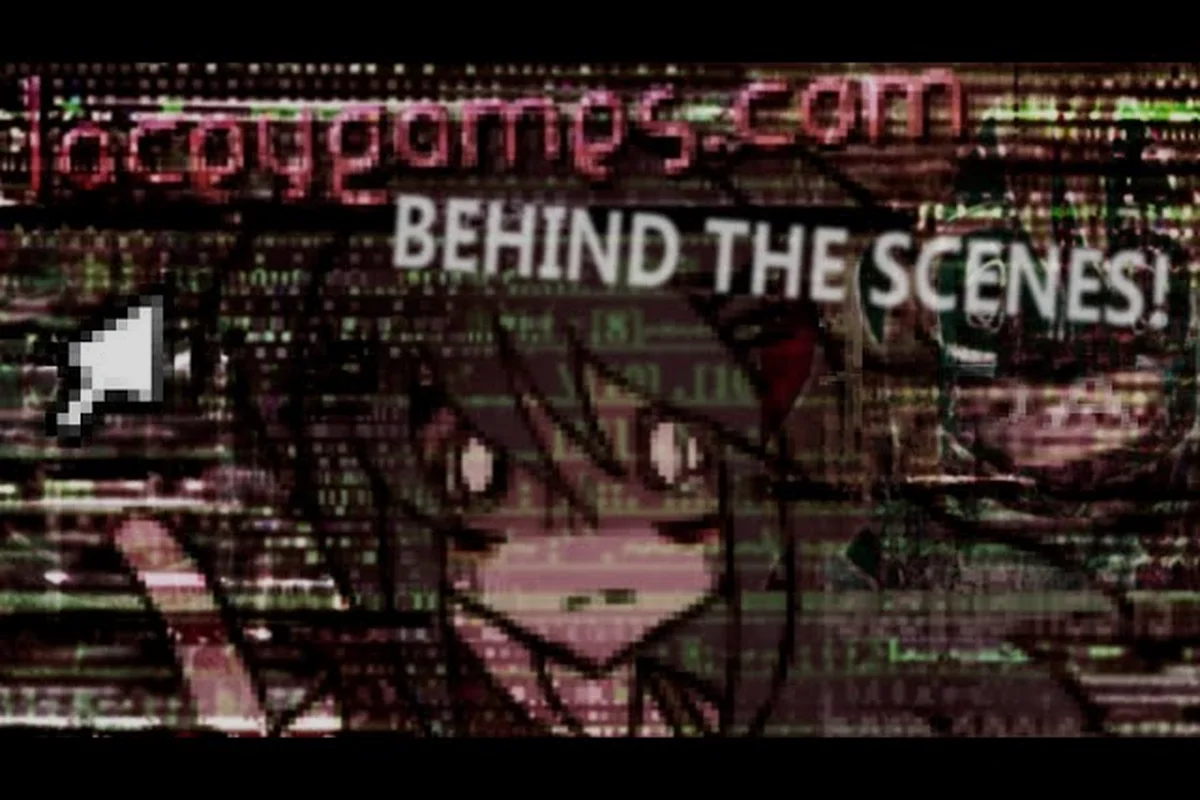
The strongest structural evidence is the official site at laceygames.com.br, which does not function like a normal marketing page. According to community reports, it presents a login-style landing page with the placeholder username Charchar887 — the same on-site name the player character Charlie uses — and it hosts a looping ambience track that fans treat as part of the game's sound identity. A storefront would never ask you to log in as a fictional character.
That single design choice reframes the whole experience. If the website is written from inside the fiction, then the game itself may be a document rather than a product, and the player may be an in-universe participant. Here is how the two readings compare:
| Feature | Standard Indie Game | ARG-Style Project |
|---|---|---|
| Official website | Store page, trailer, press kit | In-fiction login portal and devlog |
| Player identity | Anonymous customer | Named participant inside the story |
| Clues | Optional collectibles | Required decoding work |
| Community role | Mods, fan art, guides | Shared puzzle-solving and theory threads |
| Story boundary | Ends at the credits | Extends into websites and audio files |
The distinction matters because it tells you where to look. In a conventional game, secrets live in the level files. In an ARG-flavored project, secrets live in domains, usernames, timestamps, and audio loops — and Lacey's Flash Games has all four.
The Nine Hidden Clues That Fuel the ARG Theory
Most of the Lacey's Flash Games symbolism discussion circles a handful of recurring motifs. Community members have catalogued far more than nine, but these are the ones that appear consistently enough to feel deliberate rather than accidental. Each clue is listed with what players think it points toward.
| # | Clue | Where It Appears | Common Interpretation |
|---|---|---|---|
| 1 | Charchar887 login name | Official site landing page | Charlie exists outside the game |
| 2 | Looping ambience track | Site audio, in-game background | Sound carries hidden messages |
| 3 | Repeating Lacey portrait | Menus, loading screens | She is the observer, not the observed |
| 4 | Mismatched timestamps | Save files, site pages | Events happen on a real-world clock |
| 5 | Flash-era visual decay | Art style, UI glitches | Nostalgia used as a disguise |
| 6 | Unlabeled fourth wall breaks | Dialogue, cursor behavior | The game acknowledges the player |
| 7 | Recurring color palette | Character outfits, backgrounds | Specific hues mark specific characters |
| 8 | Dead links and empty pages | Site navigation | Absence is treated as content |
| 9 | Credits that name no real studio | End sequence | The "developer" is a character |
The looping ambience track deserves special attention. Players who have isolated the audio report that the loop is not seamless in the way a normal background track would be — there is a small irregularity each cycle, and some listeners believe it encodes a rhythm rather than a melody. Whether that is intentional or a byproduct of how the file was exported is genuinely unresolved, and honest analysis should say so.
Why the Login Page Is the Loudest Clue
Of everything on this list, the login page carries the most weight because it is the hardest to explain away. A placeholder username is a strange thing to publish. If the site were purely promotional, the field would be blank or say "guest." Instead it names a character who exists inside the story, which implies that someone in the fiction has an account — and that the visitor is expected to recognize the name.
Community members have pointed out that the site behaves more like a devlog than a storefront, with the fiction treated as the default frame rather than a skin layered on top. That is the same technique used by well-known ARG projects, where the website is treated as an artifact recovered from the story world. You can see the same instinct in how the game's atmosphere is constructed, which the tension and sound design breakdown covers in detail.
Decoding the Creepy Meaning Behind the Aesthetic
The Lacey's Flash Games creepy meaning is not built from jump scares. It comes from a specific kind of wrongness: bright, friendly Flash-era visuals paired with behavior that does not match the style. That mismatch is the engine of the whole experience, and it is why so many players describe the game as unsettling rather than frightening.
Consider what the aesthetic actually promises. Early-2000s browser games signal safety, simplicity, and short sessions. When a game borrows that language and then has a character stare a beat too long, or a menu option that should not exist, the violation lands harder than any monster design could. The Flash-era visual decay is not nostalgia for its own sake — it is a trust signal being deliberately broken.
The Unsettling Details Meaning, Explained
When players talk about the unsettling details meaning, they usually mean one of three things, and it helps to separate them: the wrong-time, wrong-address, and wrong-absence cues that fuel most Lacey's Flash Games ARG theory threads. Distinguishing these categories matters because each implies a different kind of threat — a synced clock suggests the fiction is watching the real world, direct address implies an in-game audience, and absence implies something was deliberately removed. Most fan theories conflate all three, which is why so many hidden-meaning readings feel unfocused.
-
Wrong-time details — events that reference a clock outside the game, suggesting the fiction is synchronized with the real world.
-
Wrong-address details — dialogue or UI text that speaks to the player rather than the character, implying an audience inside the story.
-
Wrong-absence details — missing pages, silent audio, blank portraits, where the emptiness is doing the work.
The third category is the most underrated. Horror built on absence requires the player to notice that something should be there and is not, which is a far more active form of engagement than being startled. It also explains why so many fan theories begin with a gap rather than a reveal.
Symbolism: What the Recurring Motifs Actually Point To
The Lacey's Flash Games symbolism layer is where interpretation gets genuinely interesting, because the game repeats images without ever explaining them. Repetition without explanation is a deliberate authorial choice, and it invites the audience to build meaning — which is precisely what an ARG wants from its players.
| Symbol | Literal Reading | Symbolic Reading |
|---|---|---|
| Lacey's portrait | A character asset | A watcher figure who frames the story |
| Mirrors and reflections | Decorative art | Duplicated identity, two selves |
| Static and scanlines | Retro filter | Memory degrading over time |
| Locked doors | Level boundaries | Content the player is not meant to reach |
| Clocks and timers | Gameplay pacing | Real-world time bleeding into fiction |
The mirror motif is the one most frequently cited in fan discussion, and for good reason: it appears in menus, in backgrounds, and in the way characters are framed. If the story is about a duplicated or displaced self, mirrors are the natural visual shorthand. That reading connects directly to the ongoing debate about whether Lacey is a person at all, which the analysis of Lacey's true identity explores through outfit details and character design.
It is worth being careful here. Symbolism analysis is where fan writing most often drifts into invention, and a good rule is to separate what is on screen from what it might mean. The motifs above are observable. The interpretations are arguments, and arguments can be wrong.
How the Fan Theories Compare
The Lacey's Flash Games fan theories community has produced several competing frameworks, and they are not all compatible. Comparing them side by side is the fastest way to see where the evidence is strong and where it thins out.
| Theory | Core Claim | Strongest Evidence | Weakest Point |
|---|---|---|---|
| ARG theory | The game is one node in a larger puzzle | In-fiction login site, ambience loop | No confirmed puzzle chain |
| Observer theory | Lacey represents the player | Portrait framing, fourth wall breaks | Hard to falsify |
| Duplicate-self theory | Charlie and Lacey are the same person | Mirror motif, shared naming | Limited direct confirmation |
| Memory-decay theory | The story is a degrading record | Static, timestamps, dead links | Explains tone, not plot |
| Marketing-artifact theory | It is atmospheric branding only | No external puzzle payoff yet | Cannot explain the login page |
The marketing-artifact theory deserves a fair hearing even though it is the least exciting. Plenty of indie projects borrow ARG aesthetics purely for mood, and a spooky login page is cheap to build. The counterargument is that mood-driven design usually stops at the storefront, while this project extends the fiction into a domain, a username, and an audio file — three separate artifacts that would each need a reason to exist.
Creator connections are the missing piece. If a developer were confirmed to have run an ARG before, the theory would gain real weight. As of this writing, no such confirmation has surfaced publicly, which is why the honest answer to whether this is an ARG remains "probably intentional, not yet proven."
Practical Ways to Test the ARG Theory Yourself
Rather than waiting for a definitive answer, you can gather evidence yourself — and the method matters more than the volume of screenshots collected. The following approach is what careful community researchers actually do, and it produces far better results than reading theory threads alone: build a timestamped baseline of the login page, the exact username string, and the ambience loop length before comparing anything against the in-game text, since a single capture proves nothing but a dated pair exposes deliberate edits.
-
Document the site first. Screenshot the login page, note the exact username string, and record the ambience loop length. Timestamped captures are the only way to detect later changes.
-
Compare in-game text against site text. Shared phrasing between the two is strong evidence of a single authored fiction.
-
Isolate the audio. Extract the ambience track and inspect the loop point. If the irregularity repeats at a fixed interval, it is likely designed.
-
Track timestamps across saves. If save data references dates that match real-world events, the fiction is synchronized rather than self-contained.
-
Watch the credits and dead links. Empty pages and unnamed studios are content in ARG design, not errors.
-
Log every fourth wall break. Write down the exact wording, because small variations between playthroughs are the clearest sign of intentionality.
A useful discipline is to keep two lists: confirmed observations and interpretations. Most confusion in this fandom comes from mixing the two. The full secrets and hidden details guide is a good place to cross-check whether a detail you noticed has already been catalogued by other players.
What Would Count as Proof
Real proof would look like one of three things: a puzzle in the game that resolves to a URL or password outside it, a developer statement confirming an ARG structure, or a community discovery that unlocks content nobody could reach through normal play. None of these has been publicly confirmed, which is exactly why the debate stays alive.
Reading the Game as Fiction First
The most useful shift in perspective is to stop asking whether the game is an ARG and start asking what the fiction is doing. Even if every external clue turned out to be atmosphere, the internal story still carries a coherent set of ideas about observation, duplication, and memory. Those themes hold up on their own.
That framing also protects you from disappointment. ARG hunting is a high-variance hobby: most trails go cold, and the ones that pay off are rare. Treating the game as a text with deliberate ambiguity means you get value from the analysis regardless of whether a hidden puzzle chain ever materializes.
For readers who want to go deeper into the narrative side, the collected lore theories and timeline work tracks how interpretations have shifted as new details surfaced. The pattern there is instructive: early theories focused on scares, later ones on structure, and the most recent work focuses on the boundary between the game and its website.
Frequently Asked Questions
Is Lacey's Flash Games officially confirmed to be an ARG?
No official confirmation exists as of this writing. The evidence — an in-fiction login page, a named placeholder account, and a looping ambience track — strongly suggests deliberate ARG-style design, but no developer statement or completed puzzle chain has verified the structure publicly.
What is the strongest clue for the Lacey's Flash Games ARG theory?
The official site's login page is the strongest single clue. It uses Charchar887, the same name the player character uses, which implies an account exists inside the fiction. A purely promotional site would not name a fictional character in a login field.
What does the creepy meaning of the game come from?
It comes from stylistic mismatch rather than gore. Bright Flash-era visuals promise safety, and the game breaks that promise through held stares, fourth wall breaks, and empty pages. The unsettling details meaning is mostly about absence — things that should be present and are not.
Are the fan theories about Lacey and Charlie being the same person plausible?
They are plausible but unproven. The mirror motif, shared naming conventions, and duplicated framing support a duplicate-self reading, yet no scene directly confirms it. Consider the concrete overlap: the login name Charchar887 matches the player character's own handle, and Charlie's sprite reuses Lacey's framing in the mirrored room sequences — a visual echo rather than a stated reveal. Treat it as a well-supported interpretation rather than established fact.
How can I help test whether the game is an ARG?
Document everything with timestamps, isolate and inspect the ambience loop, compare site text against in-game dialogue, and log every fourth wall break word for word. Keeping confirmed observations separate from interpretation is the single most useful habit for this kind of research.