
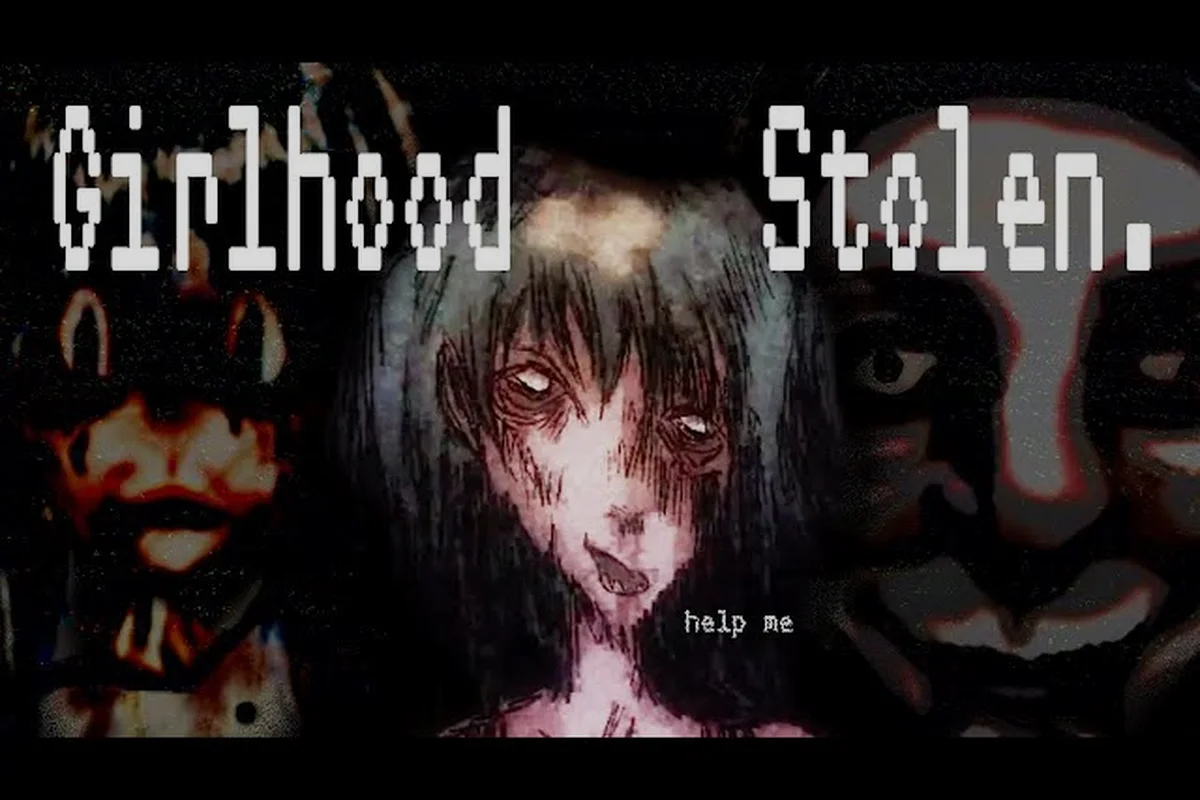
Lacey's Flash Games Lacey trivia is the fastest way to understand why this small horror series still gets talked about years after its release. She is the player's avatar, the narrator, and the source of nearly every unsettling moment in the game, which makes her worth studying closely.
Who Lacey Is in the Series
Lacey is the silent protagonist of the series, a young woman who sits down at a computer and follows a set of instructions that grow steadily more disturbing. The game never shows her face directly, and that choice is deliberate: the horror works because you project yourself onto her. According to community discussion, the first-person framing is the single biggest reason the scares land so hard.
| Character attribute | What the series shows | What it never confirms | Effect on the "who are the girls" question |
|---|---|---|---|
| Official about-page bio | "Lacey is a fun loving girl who loves a good adventure" (laceygames.com) | Whether this bio describes the protagonist or the in-universe host persona | Establishes a cheerful baseline the horror later subverts |
| Spoken dialogue | Zero lines across every installment | Her emotional state during instruction escalation | Other girls' voices (instruction-givers, masked figures) carry all audible characterization |
| Visual identity | First-person view only; face never shown directly | Hair, eye color, or any canonical portrait | Fan depictions of Lacey vary wildly, so "the girls" can't be matched to her visually |
| Surname / family | Nothing stated in any bundled activity | Any family relation to Rocio Yani or Grace | Keeps creator-lore theories (Rocio Yani, Grace) speculative rather than resolved |
| Role across bundled games | Host and player avatar in Lacey's Petshop, Lacey's Wardrobe, Lacey's Love Meter, and the jammers segments | Whether these segments are diegetic or in-universe flash games she plays | Each bundled activity introduces adjacent girl characters with no confirmed link to Lacey |
| Compliance tracking | Game branches on obey vs. refuse prompts | Which branch is "canon" | Different endings imply different fates for the girls, none confirmed |
Her role shifts across the series. In the opening installment she is a curious player exploring a mysterious flash game collection; by the later entries she is something closer to a participant in a ritual she does not fully understand. That progression is the spine of the whole narrative.
A few core facts define her: Lacey has no spoken dialogue in any installment, so her emotional state is conveyed entirely through sound design — the hum of the CRT monitor, the click of a mouse she never chose to move, and the screen-static that spikes whenever an instruction turns violent. Her player-controlled first-person perspective means you literally see what she sees, which is why the series' instructions feel like they're addressed to you rather than to a character. And her escalating compliance is tracked by the game itself: obey the prompt and Lacey's fate advances one step further into the ritual; refuse, and the ending branches differently. The series never confirms her full backstory, a deliberate ambiguity that keeps the "who are the girls" question alive across every entry.
-
No spoken dialogue — Lacey never talks, so every reaction is implied through sound design and screen effects.
-
Player-controlled perspective — you see what she sees, which is why the instructions feel personal.
-
Escalating compliance — the game tracks whether you obey, and Lacey's fate changes based on your choices.
-
Deliberate ambiguity — the series never confirms her full backstory, which fuels fan theories.
The character guide angle matters because Lacey is not a traditional character with a stat sheet. She is a narrative device as much as a person, and understanding that helps you read the rest of the cast correctly. Where a typical horror protagonist is defined by a bio or inventory, Lacey is defined by absence: no portrait, no dialogue tree, no confirmed surname. That vacuum is what lets the "who are the girls" theory ecosystem flourish — every other figure in the series, from the masked antagonists to the voices issuing instructions, is legible only in relation to her silence. Read her as a mirror rather than a person and the rest of the Lacey series character roster snaps into focus.
Why the Series Never Names Her Directly
The game avoids saying "Lacey" out loud in most scenes. Instead, her name appears in titles, menus, and the framing of the series itself. This is a common horror technique — the less a character is defined, the more the audience fills in the gaps. Community reports note that first-time players often finish the game without realizing the protagonist has a name at all, which is part of the intended effect.
Lacey's Appearance and Visual Design
Her appearance is intentionally minimal. Lacey's Flash Games Lacey appearance is defined by what you do not see: no character portrait, no mirror scene, no clear reflection. The visual language of the series relies on desaturated palettes, CRT-style screen filters, and sudden color shifts to signal danger.
| Visual Element | What It Communicates | When It Appears |
|---|---|---|
| Static overlay | Loss of control | During instruction prompts |
| Red tint | Immediate threat | Before jumpscares |
| Blurred edges | Unreliable perception | Late-game sequences |
| Black screen | Transition or death | Between chapters |
| Cursor distortion | Player agency breaking | Final acts |
The design choice to keep her unseen also solves a practical problem: the game was built in Flash, and a fully animated protagonist would have been expensive. Instead, the developers leaned into implied presence — footsteps, breathing, and mouse movement do the work a character model normally would.
Players who dig into the files sometimes find unused assets, and community reports suggest early builds included a rough character sketch that was cut before release. Whether that sketch was ever meant for Lacey herself is unclear, and the developers have not confirmed it.
Who Are the Girls in Lacey's Flash Games?
This is one of the most common questions, and the answer is more layered than most players expect. The girls referenced throughout the series are not a single group — they are a mix of in-game characters, implied victims, and meta-narrative figures tied to the game's fictional creator.
Here is how the cast breaks down, moving from the playable center outward: Lacey anchors the player perspective, the instructor voice functions as the antagonist who directs her actions, and the other girls — never fully rendered on screen — serve as referenced victims whose unseen fates mirror Lacey's own trajectory. Beyond that in-game layer sit two meta figures: the creator figure, who explains the game's fictional origin, and Grace, a recurring name threaded through the lore outside the game itself.
| Figure | Role | Connection to Lacey |
|---|---|---|
| Lacey | Player protagonist | Central viewpoint character |
| The instructor voice | Antagonist presence | Directs Lacey's actions |
| The other girls | Referenced victims | Parallel to Lacey's fate |
| The creator figure | Meta-narrative element | Explains the game's origin |
| Grace | Recurring name | Tied to the lore outside the game |
The "other girls" are never fully shown, which is exactly the point. They exist to establish a pattern: Lacey is not the first person to sit at this computer, and the game makes that clear through environmental clues rather than exposition. For a deeper breakdown of the full roster, the complete characters list covers every named figure and how they connect.
The Grace Connection
Grace is a name that surfaces repeatedly in community theories, and she is often linked to the game's fictional creator. The series never resolves her role outright, but the recurring references suggest she was either an earlier participant or someone connected to the person who built the game. The Rocio Yani lore breakdown explores that thread in detail, including what happened to the creator and why the game exists at all.
Every Character and How They Fit Together
Building a full picture of the cast requires separating what the game shows from what fans have inferred. In Lacey's Flash Games, every character discussion tends to blur those two categories, so it helps to sort them by evidence tier before reading any guide. The split runs along a clear line: figures with an on-screen sprite or a scripted line of dialogue sit in one tier, while names that surface only through file names, background text, or community retellings sit in another. That gap is where most Lacey trivia disputes start — a name like Grace circulates as lore long before any scene confirms it, and a creator figure gets treated as a character even though the game only gestures at them through environmental detail. Sorting by evidence tier first keeps the confirmed Lacey series character roster from absorbing the meta layer.
Confirmed in-game figures:
-
Lacey — the protagonist, present in every installment.
-
The instructor — the voice or text that issues commands.
-
Referenced victims — named or implied, never shown directly.
Inferred or meta figures:
-
The creator — referenced through files and environmental storytelling.
-
Grace — a name tied to the lore, never confirmed on screen.
-
Rocio Yani — a real-world figure connected to the game's history.
The distinction matters because a lot of fan content treats inferred figures as confirmed canon. When you read a character guide, check whether the claim is backed by something in the game or by community interpretation. Both are useful, but they are not the same thing.
Why the Cast Feels Larger Than It Is
The series uses name-dropping as a horror tool. A single line of text mentioning someone who never appears creates the impression of a much bigger world. In practice, the cast is small — a handful of named figures and one protagonist — but the writing makes it feel crowded. That is efficient design, and it is why the game still generates theory threads years later.
Ten Lacey Trivia Facts Worth Knowing
Here is the core of the Lacey's Flash Games Lacey trivia most players miss on a first run. Each fact is drawn from in-game content or widely reported community findings rather than from secondary summaries, and that distinction matters: a claim like "she never speaks" is verifiable by replaying every scene, while a claim about her motives usually isn't. The ten points below split roughly into two tiers — hard observations (the diegetic static, the first-person-only camera, the obedience tracking) and softer inferences (her age, her background, her fate) — so treat the first group as canon and the second as interpretation until you've checked it against the full character list yourself.
-
She never speaks. Not a single line of dialogue is attributed to her, which is unusual even for silent protagonists.
-
Her name is in the title, not the script. The series frames her identity externally rather than through dialogue.
-
The game tracks your obedience. Following or ignoring instructions changes what you see, and the completion guide explains how the branches differ.
-
Her perspective is the camera. There is no third-person view at any point in the series.
-
The cursor is a story element. Mouse movement is used to build tension, not just to navigate menus.
-
She has no confirmed age or background. The series leaves both blank on purpose.
-
Her fate varies by ending. Different playthroughs produce different outcomes for her.
-
She is referenced in later installments. Callbacks to earlier events confirm continuity across the series.
-
The static effect is diegetic. It represents her perception breaking down, not just a visual style.
-
Fan theories outnumber confirmed facts. Most of what circulates online is interpretation, not canon.
That last point is worth sitting with. The series is short, and the amount of confirmed information about Lacey is genuinely small. Most of the "trivia" you find online is inference dressed up as fact, which is why a careful character guide is more useful than a wiki dump.
Fact-Checking Trivia Claims on Your Own
Before repeating a claim about Lacey, ask three questions: Does it appear in the game itself? Is it supported by multiple independent community reports? Has a developer ever confirmed it? If the answer to all three is no, treat it as a theory. This simple filter will save you from spreading misinformation, and it makes you a more reliable source when discussing the series with other players.
Reading Lacey as a Character Study
Beyond the scares, Lacey works as a study in loss of agency. The game's central mechanic is compliance: you are told to do things, and the horror comes from how quickly you stop questioning why. That structure only functions because Lacey has no voice of her own — she cannot push back, so the player's choice to obey becomes the only resistance available.
This is why the series is often discussed alongside other short experimental horror games rather than traditional narrative titles. The character is thin by design, and the emptiness is the point. Players who expect a fleshed-out backstory will be disappointed; players who read her as a mirror for the player will find the game far more effective.
The beginner walkthrough is a good companion here, because it shows how the instruction structure escalates and where the game gives you a genuine choice versus an illusion of one. Noticing that difference is the key to reading Lacey's role correctly.
Frequently Asked Questions
Does Lacey ever speak in the series?
No. Lacey has no spoken or written dialogue at any point, and the game conveys her reactions entirely through sound design, screen effects, and camera behavior. This silence is intentional and is one of the main reasons the horror feels personal to each player.
Who are the girls mentioned in Lacey's Flash Games?
They are a mix of referenced victims and implied earlier participants, never shown directly on screen. The game uses them to establish that Lacey is not the first person to follow the instructions, which raises the stakes without requiring a large animated cast.
Is Lacey's appearance ever shown?
Not clearly. There is no portrait, mirror scene, or reflection of her face anywhere in the series, and no cutscene ever grants a clear look at her. Community reports mention unused early assets and a scrapped sprite sheet, but nothing confirmed depicts her directly, so her appearance remains deliberately undefined — a design choice consistent with her voiceless role, since the game withholds both her dialogue and her face to keep the player projecting their own reading onto her.
Are the fan theories about Grace and Rocio Yani canon?
Mostly no. Grace and the creator figure are referenced in the game's lore, but the specific theories connecting them are community interpretation. The Grace thread in particular rests on sparse environmental clues — a name appearing in background text and a handful of ambiguous asset references — rather than any scene that confirms a relationship. Treat them as informed speculation rather than confirmed story facts until the developers address them directly, and separate what the game actually shows from what fans have inferred.
What changes if I ignore the instructions?
Ignoring the prompts alters what you see and which ending you reach, and several sequences only trigger when you disobey — the compliance tracker is the mechanism behind this. The game logs each refusal as a persistent flag rather than a one-off event, so a single early disobedience can shift later camera behavior and sound cues, not just the final outcome. That is why two players following identical routes but differing on one prompt can describe the same scene in completely different tones.
Lacey remains one of the more interesting protagonists in short-form horror precisely because so little about her is confirmed. Her silence, her unseen face, and her shifting role across the series all push the player to fill in the blanks, and that participation is what makes the game stick with people long after the credits. The confirmed facts are few, the theories are many, and knowing which is which is the real value of studying her closely.