
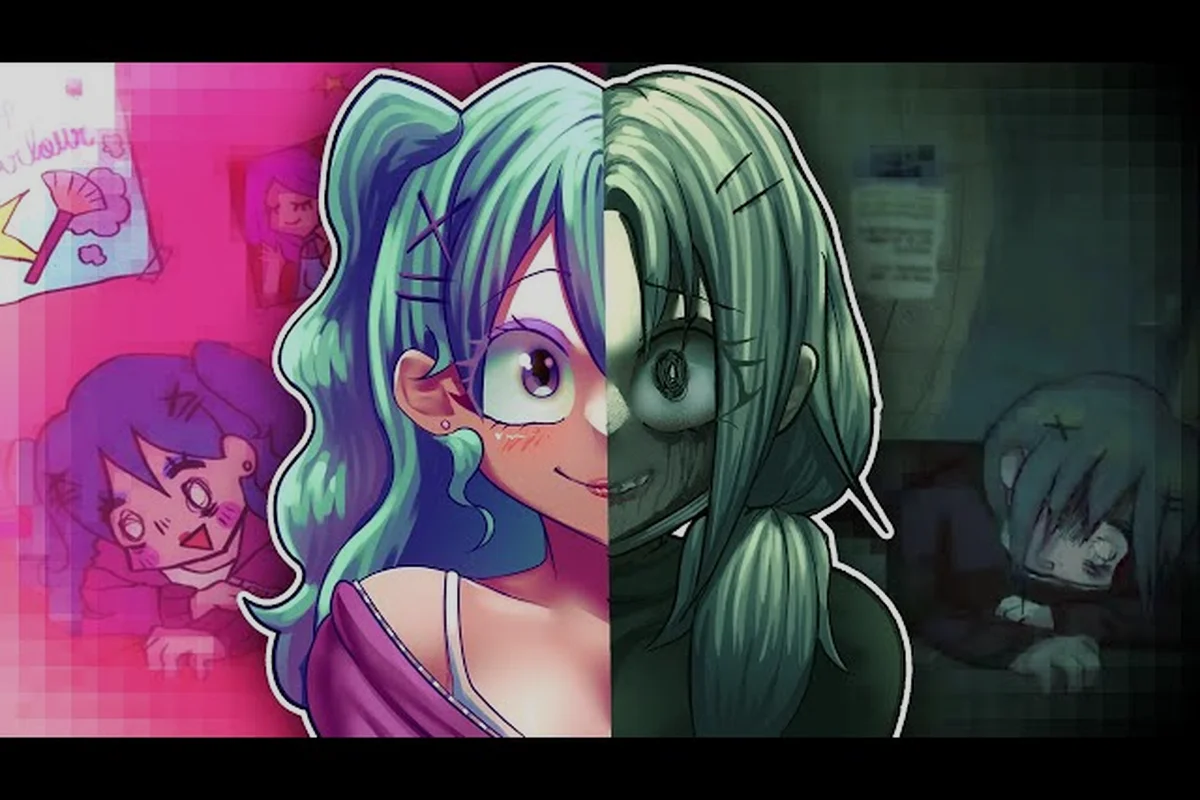
Lacey's Flash Games characters are the reason this analog horror series lingers in your head long after the browser tab closes, and Lacey herself sits at the center of that unease. Understanding who she is, what she wants, and how she frames the player's role changes how every scene reads.
Lacey's Identity: Host, Narrator, and What She Hides
The question of who Lacey actually is drives most of the fandom's theorizing, because the series never hands you a clean answer. She presents herself as a cheerful host guiding you through a collection of old Flash-style minigames, yet her tone slips in ways that make the framing feel less like entertainment and more like a trap.
Community reports consistently describe her as the narrator-host figure who controls what you see and when you see it. She introduces each game, comments on your performance, and occasionally reacts in ways that suggest she has been waiting for someone to arrive. That host framing is the core of her Lacey role: she is not a passive mascot but an active gatekeeper between the player and the deeper story.
What makes her unsettling is the gap between her sunny delivery and the content she presents. She praises you warmly, then loads a game with distorted visuals and a lingering sense of wrongness. According to player experience, that contrast is deliberate — the series uses her friendliness as camouflage, so the horror lands harder when the mask drops.
Her backstory remains fragmentary by design. Clues are scattered across minigames, corrupted text, and audio artifacts rather than delivered in a cutscene, which is why so many viewers finish the series with more questions than answers. Piecing together the wider narrative is easier once you read the full story breakdown, which connects the scattered hints into a coherent timeline.
Lacey's Personality and How It Shapes Each Scene
Her personality is the engine of the whole experience, and it operates on two layers that constantly bleed into each other. On the surface she is warm, encouraging, and almost motherly, celebrating your wins and gently nudging you forward. Underneath, she reads as possessive and watchful, as though your presence matters to her in a way she will not fully explain.
That duality shows up in how she handles failure. When you lose a minigame, she does not scold you — she reassures you, sometimes too insistently, and the repetition starts to feel like she needs you to keep playing. Players often note that her encouragement becomes more unnerving than any jump scare, because it implies she has a stake in your continued participation.
Her humor is another tell. She makes small jokes and playful asides that would be charming in a normal kids' game, but placed next to the corrupted content, they read as deflection. She is steering your attention away from something, and the more you notice it, the more deliberate her cheerfulness seems.
| Personality Layer | How It Appears | What It Suggests |
|---|---|---|
| Surface warmth | Praise, encouragement, friendly greetings | She wants you to stay engaged |
| Watchful control | Comments on your choices, tracks progress | She is monitoring more than gameplay |
| Playful deflection | Jokes that change the subject | She is hiding context |
| Sudden coldness | Flat tone, pauses, glitched lines | The mask is slipping |
| Possessive attachment | Insistence that you keep playing | Your presence has meaning to her |
The Lacey personality is best understood as a performance rather than a fixed trait. She adapts her tone to keep you comfortable, and every adjustment hints at what she is protecting you from — or protecting herself from. The table's "Sudden coldness" row is the clearest proof: a flat, glitched line lands mid-praise, the warmth drops out for a beat, then snaps back as if nothing happened. That flicker matters because it shows the cheer is chosen, not felt — she is calibrating each line to your reactions, and the seams only show when her watchful layer overrides the motherly one.
Lacey's Backstory: What the Clues Actually Reveal
Her backstory is told through absence. There is no origin cutscene, no exposition dump, and no clean confirmation of who she was before she became the host. Instead, the series leaves fragments: a name that appears where it should not, a game that references a creator, and audio that sounds like a recording of someone who is no longer present.
Community data suggests Lacey is tied to the vanished creator behind the games, though the exact relationship stays ambiguous. Some readings cast her as a preserved personality left inside the software; others treat her as a guide who inherited the role after the original author disappeared. Both interpretations fit the evidence, which is part of why the character generates so much discussion.
The Lacey backstory also connects to the broader mystery of the missing creator, a thread explored in detail in the Rocio Yani explainer. That article traces how the creator's disappearance shapes the games' content and why Lacey's role as host may be a direct consequence of it.
| Backstory Element | Where It Surfaces | Interpretation |
|---|---|---|
| Unnamed creator reference | Corrupted game text | Lacey may be derived from the author |
| Recorded-sounding audio | Menu ambience | She may be a preserved recording |
| Inconsistent memories | Mid-game dialogue | Her identity may be fragmented |
| Missing-person framing | Environmental clues | Someone vanished before you arrived |
| Recurring name glitch | Loading screens | Her name is being overwritten |
None of these clues confirm a single answer, and that ambiguity is intentional. The series treats backstory as something you assemble rather than something you are given, which keeps the character active in your mind long after the credits. Note how the table's five rows pull in different directions: the corrupted game text and the recurring name glitch both point to Lacey as a derived or overwritten identity, while the recorded-sounding menu ambience and inconsistent mid-game dialogue suggest a preserved or fragmented self rather than a stable narrator. Because no single clue resolves the others, the Lacey backstory functions like a puzzle box where each fragment is legible on its own but never locks into a complete picture — which is exactly why the Rocio Yani thread matters, since the missing creator is the one node that could tie the glitches, the audio, and the memory gaps together.
The Role Lacey Plays in the Player's Experience
Her Lacey role is structural as much as narrative. She is the interface between you and the games, which means every interaction passes through her framing first. When she introduces a minigame, she sets your expectations; when she reacts to your results, she shapes how you feel about them. That gives her enormous influence over tone without ever letting her leave the screen.
This is why she functions as both host and unreliable narrator. She tells you what the games are, but her descriptions do not always match what you experience. A game she calls simple turns out to be disturbing; a challenge she calls fun leaves you uneasy. The mismatch is the point — it teaches you to distrust her framing while still depending on it to progress.
Her relationship with the player is unusually direct for the genre. She addresses you, not a silent protagonist, and she seems aware that you are a person choosing to continue. That awareness creates a subtle pressure: quitting feels like abandoning her, and continuing feels like walking deeper into something you should probably leave alone.
The supporting cast around her — the other voices and figures who appear across the series — is covered in the narrator and character breakdown, which maps how each presence relates to Lacey's central position.
Key Lacey Quotes and What They Mean
Her dialogue is sparse but carefully chosen, and a handful of lines carry most of the characterization. The Lacey quote most often cited by players is her reassurance that you are welcome to stay as long as you like — a line that sounds kind until you notice she never offers a way out.
Another frequently discussed line involves her claiming she remembers you, even on a first playthrough. That contradiction is a favorite talking point because it implies either a looping narrative or a host who has greeted many visitors before. Either reading deepens the sense that you are not the first person she has welcomed.
| Quote Theme | Surface Meaning | Deeper Reading |
|---|---|---|
| "Stay as long as you like" | Hospitality | No exit is offered |
| "I remember you" | Friendliness | Loop or prior visitors |
| "Let's try another one" | Encouragement | She needs you to keep going |
| "You're doing so well" | Praise | Reinforcement to prevent quitting |
| "Don't worry about that" | Reassurance | Active deflection from clues |
The power of these lines comes from delivery rather than wording. A flat pause after a friendly sentence does more work than any explicit threat, and the series leans on that restraint to keep the tension high without gore or shock tactics.
How Lacey Compares to Other Characters in the Series
Placing Lacey beside the rest of the cast clarifies what makes her distinct. She is the only figure who speaks to you continuously and the only one whose motives stay genuinely unclear. Other characters tend to appear briefly, deliver information, and withdraw, which makes her constant presence feel like the anchor of the experience.
| Character | Screen Time | Relationship to Player | Narrative Function |
|---|---|---|---|
| Lacey | Continuous | Direct address, guiding | Host and gatekeeper |
| The creator | Absent, referenced | Unknown | Source of the mystery |
| Secondary voices | Brief appearances | Indirect | Clue delivery |
| The player | Implied | Addressed by Lacey | Participant and witness |
That contrast matters because it isolates her. Without a peer to compare against, she becomes the sole authority on what is happening, and the series exploits that isolation to make her framing feel inescapable. The broader roster is laid out in the complete character list, which shows how thin the supporting cast is by comparison.
Practical Tips for Reading Lacey's Character
Reading Lacey demands attention rather than analysis, because the series rewards viewers who notice small inconsistencies across the lacey's flash games characters rather than taking her framing at face value. A few habits make the characterization much clearer on a second pass: watch how her cheerful host persona slips when a minigame's content turns darker than her narration admits, and treat any mismatch between her description and the actual game as deliberate authorial signaling rather than a design oversight. Because the games were built as a connected series, these small tells accumulate across installments, and a detail that reads as random on a first playthrough — a repeated phrase, a half-finished name in glitched text — often resolves into backstory once you have the later context to place it.
-
Track her tone shifts. Note the exact moment her warmth flattens; those beats usually precede a reveal or a deflection.
-
Compare her descriptions to the actual games. Every mismatch between her framing and the content is a clue about what she is hiding.
-
Watch for repetition. Repeated reassurances signal pressure, not comfort, and they often cluster around moments where you might stop playing.
-
Log the glitched text. Corrupted lines frequently contain name fragments or references that connect back to her origins.
-
Note who she never mentions. The people absent from her dialogue are often as important as the ones she names.
These habits turn a passive watch into an active reading, and the character becomes far more legible once you start treating her dialogue as evidence rather than atmosphere. The payoff is cumulative rather than instant: a tonal flattening you log in an early installment often explains a glitched name fragment two games later, so the clues only resolve when cross-referenced against the lacey's flash games characters roster as a whole. Practically, that means keeping a running note of each contradiction between her cheerful host framing and the darker minigame content, since the lacey's flash games lacey backstory is assembled from exactly these mismatches — the reassurances that cluster before a content warning, the names she dodges, the corrupted strings that surface mid-loading screen. Read that way, her personality stops being a fixed mask and becomes a record of what she is choosing to withhold.
Frequently Asked Questions
Who is Lacey in Lacey's Flash Games?
Lacey is the host figure who introduces each minigame and comments on your progress throughout the series. She functions as both narrator and gatekeeper, controlling what you see while maintaining a cheerful persona that gradually reveals unsettling undertones as the story develops.
Is Lacey a villain or a victim?
Neither reading is confirmed. Community interpretation splits between seeing her as a manipulative presence keeping you engaged and as a preserved remnant of the missing creator. The series deliberately leaves both possibilities open, which is why her motives remain the most debated topic among players.
What is Lacey's most memorable quote?
Her line inviting you to stay as long as you like is the most frequently cited, because it sounds welcoming while quietly implying there is no exit. Players often point to it as the moment her friendly framing first feels genuinely threatening.
Does Lacey appear in every game?
She is present throughout the series as the framing voice, though her direct commentary varies by segment: on menu screens she delivers only brief greetings, while between minigames she reacts to specific outcomes like a failed round or a cleared level, and her tone shifts accordingly. Even when she is not speaking, her introductions and reactions shape how each minigame is presented, keeping her central to the experience.
Why does Lacey say she remembers the player?
That line suggests either a repeating narrative loop or a host who has welcomed previous visitors before you. The series never resolves which explanation is correct, and the ambiguity is widely treated as intentional characterization rather than a loose end.
Lacey works as a character precisely because she is never fully explained. Her warmth, her watchfulness, and her carefully chosen words create a host who feels present long after the games end, and the clues scattered through her dialogue reward anyone willing to look twice.