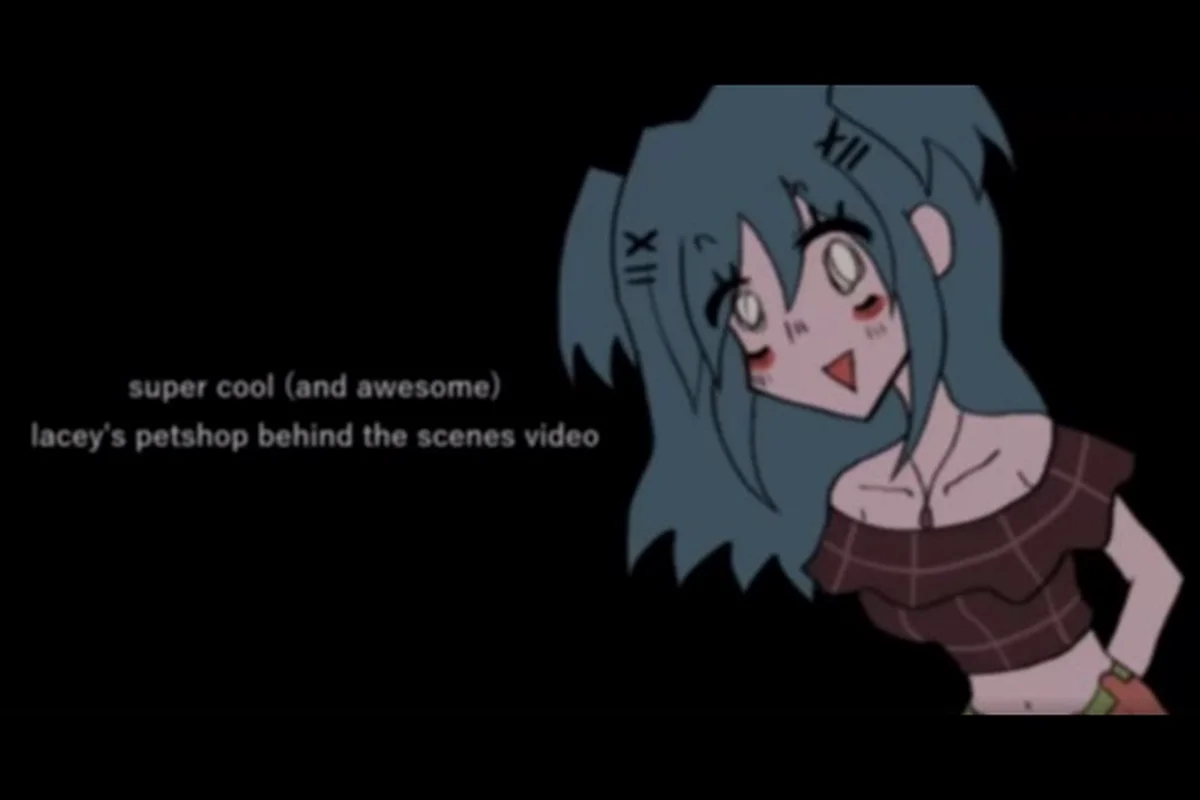
The story of Lacey's Flash Games behind the scenes is stranger than the game itself: a vanished creator, a fake studio, and a website that was never supposed to be found. Understanding how this project was assembled explains why it unsettles players so effectively.
Most horror games hide their production history. This one turned its production history into the horror. What follows traces the design decisions, the credited names, and the timeline that led to the Steam release, so you can separate confirmed facts from the creepypasta that surrounds them.
The Making of Lacey's Flash Games: What Was Actually Built
The Lacey's Flash Games making of story begins with a deliberate design choice: the game presents itself as an archive rather than a product. Players do not enter a menu screen so much as they stumble onto a defunct personal website, complete with broken navigation, dated browser aesthetics, and a guestbook that feels years out of date.
That framing was not an accident of budget. Community breakdowns of the site structure point out that nearly every element reinforces the same fiction — the fake 2000s web design, the dead Flash-era layout, and the abandoned personal homepage aesthetic all serve one purpose: convincing you that you are trespassing somewhere private.
According to community documentation of the site, the project leans on a small set of core pillars: authenticity of decay, diegetic navigation, slow-burn pacing, and ambiguous authorship. These aren't marketing bullet points but load-bearing design decisions — the fake 2000s web design only works because the broken links are scripted rather than accidental, and the dead Flash-era layout only unsettles because the menus never break character to acknowledge you're playing a game. Strip out any one pillar and the abandoned personal homepage illusion collapses into an ordinary horror title with a retro skin.
-
Authenticity of decay — broken links and missing pages are intentional, not bugs
-
Diegetic navigation — menus exist inside the fiction, never outside it
-
Slow-burn pacing — scares arrive through repetition and familiarity, not jump cuts
-
Ambiguous authorship — the question of who made the site is itself the hook
The result is a title that behaves more like an artifact than a game. That distinction matters because it shapes everything downstream, from how the credits are presented to how the community investigates the fiction. Because the site never acknowledges itself as a product, the credits can't sit in a conventional menu — they're folded into the diegetic navigation, surfacing as buried pages or guestbook entries rather than a scrolling roll. The same logic governs the ambiguous authorship pillar: with no developer splash screen or storefront framing to anchor it, the question of who actually built the archive becomes something players excavate from page source, timestamps, and dead links. This is why community breakdowns treat the site structure itself as evidence — every scripted 404 and stale guestbook post doubles as a clue, so the artifact framing converts ordinary web decay into investigative material.
Why the "Found Website" Format Works
The found-footage approach has a long history in horror, but the web-native version is rarer. By mimicking the specific texture of early-2000s personal sites — guestbooks, hit counters, animated GIFs, and inconsistent fonts — the developers trigger a very particular kind of nostalgia that curdles into unease.
Players who grew up on that era of the internet recognize the visual grammar instantly, which is exactly why the uncanny familiarity lands so hard. The site feels like somewhere you visited as a child, and that recognition is the engine driving the whole experience.
Inside the Lacey's Flash Games Development Credits
The most scrutinized part of the Lacey's Flash Games development story is the credits. Community researchers have spent considerable time tracing the names attached to the project, and the findings are deliberately murky. The credited creator, Rocio Yani, is presented as a real person with a real portfolio, yet the trail goes cold in ways that feel engineered rather than accidental.
If you want the full breakdown of that thread, the Rocio Yani investigation walks through the evidence and the theories. For this article, the key takeaway is structural: the credits are part of the fiction, and they were designed to reward the kind of player who reads them closely.
| Credit Element | What It Suggests | Community Consensus |
|---|---|---|
| Rocio Yani as sole creator | A personal, obsessive project | Widely treated as an in-fiction persona |
| Minimal team listing | Deliberate isolation of authorship | Reinforces the "found artifact" framing |
| No verifiable studio history | The studio may not exist | Confirmed as fictional by most researchers |
| Guestbook entries | Simulated community activity | Read as environmental storytelling |
| Dated copyright footers | A specific era of the web | Consistent with the 2000s aesthetic |
The table above captures why the credits generate so much discussion. Each element is individually plausible, but together they form a pattern that rewards scrutiny — a hallmark of intentional design rather than sloppy record-keeping. Take the dated copyright footers: they anchor the project to a specific slice of the 2000s web, the same era evoked by the simulated guestbook entries, so the "found artifact" framing holds whether a player checks the footer or the guestbook first. The minimal team listing compounds this, since a solo-credited creator with no verifiable studio history reads as deliberate isolation of authorship rather than an incomplete record. That consistency across five separate credit elements is what pushes most researchers toward reading the whole credits block as environmental storytelling, not an oversight.
The "Missing Creator" as a Design Tool
Presenting a creator who cannot be verified does something powerful: it transfers the mystery from the game to its author. Players stop asking "what happens next in the game" and start asking "who made this and why." That shift in attention is one of the smartest structural decisions in the entire project, and it explains why the lore community around the game is so active.
The Lacey's Flash Games Release Countdown and Steam Launch
The Lacey's Flash Games release countdown has been one of the more unusual marketing stories in indie horror. Rather than a conventional trailer campaign, the rollout leaned on the same ambiguity that defines the game itself — announcements that blurred the line between promotion and fiction.
For the full timeline of how the launch unfolded, including the Halloween window that dominated discussion, the release date breakdown covers the dates and the surrounding speculation in detail. The short version is that the Steam launch arrived with far less conventional fanfare than a typical indie release, and that restraint was almost certainly intentional.
| Phase | What Happened | Player Reaction |
|---|---|---|
| Pre-announcement | Site circulated by word of mouth | Confusion, then curiosity |
| Discovery wave | Streamers and forums picked it up | Rapid community growth |
| Countdown period | Teasers tied to the in-game fiction | Heavy theory-crafting |
| Steam release | Store page went live | Mixed surprise and satisfaction |
| Post-launch | Lore discussion intensified | Sustained engagement |
The word-of-mouth discovery phase is worth highlighting. Because the site did not announce itself as a game, early players found it the way you would find a strange link in an old forum thread — and that discovery method became part of the experience. Marketing that disguises itself as an accident is difficult to pull off, and the fact that it worked here says a lot about how carefully the rollout was planned.
Why the Steam Page Matters for the Fiction
The Steam storefront introduces a tension the developers had to handle carefully. A store page is inherently commercial, and commercial framing can puncture the illusion of a found artifact. The compromise appears to be a store presence that stays minimal and lets the game speak for itself, keeping the storefront copy restrained so it does not contradict the in-site fiction.
Lacey's Flash Games News 2026: What Changed This Year
The Lacey's Flash Games news 2026 cycle has been dominated by two things: the Steam release and the community's ongoing effort to map the fiction. Unlike a live-service title, this game does not generate news through patches and events. It generates news through interpretation.
That is an important distinction for anyone following the project. The most valuable updates tend to come from players rather than from the developers, and they usually take the form of new connections between details that were always present. If you want to track where the project is heading next, the future content overview collects the credible signals and separates them from wishful thinking.
Key developments worth knowing about: the Steam release widened the audience far past the original discovery wave, but the more significant shift happened behind the scenes in how the community organized itself. Lore documentation matured from scattered forum threads into structured wikis and timelines, while character analysis turned the full character roster into a jumping-off point for theory-crafting rather than a simple reference list. Difficulty and replay discussion also grew as players compared completion routes and flagged which flash-game segments hide the densest environmental clues. The unresolved creator mystery sits underneath all of it, sustaining long-term interest precisely because no official making-of has ever confirmed the development story.
-
Steam availability expanded the audience well beyond the original discovery wave
-
Lore documentation matured into organized community resources
-
Character analysis became a major discussion topic, with the full character roster serving as a starting point
-
Difficulty and replay discussion grew as players compared completion routes
-
Creator mystery remained unresolved, which keeps long-term interest alive
The pattern here is familiar to anyone who has followed an ARG-adjacent horror release: the game is the seed, and the community is the garden. News in 2026 is less about what the developers shipped and more about what players uncovered.
Separating Confirmed Facts From Creepypasta
One practical skill for following this game is telling the two apart. Confirmed facts include the existence of the site, the Steam release, and the credited names as presented in-game. Unconfirmed material includes claims about real-world disappearances, hidden phone numbers, and alleged developer statements that cannot be sourced.
Community researchers have been reasonably disciplined about labeling speculation, but the line blurs quickly once a theory gets repeated enough times. Treat anything without a verifiable source as fiction until proven otherwise — which, in a game like this, may be exactly the point.
How the Design Process Shaped the Player Experience
Understanding the Lacey's Flash Games behind the scenes process also explains the game's difficulty curve. The pacing is deliberately uneven: long stretches of quiet exploration punctuated by moments that reward attention rather than reflexes. That structure is a direct consequence of building the game as a website first and a game second.
The difficulty and replay breakdown goes deeper into how the challenge is tuned, but the design logic is visible from the outside. Because the site format encourages slow reading and repeated visits, the game can afford to hide its most important content in places that require patience rather than skill.
| Design Choice | Effect on Players | Why It Was Likely Intentional |
|---|---|---|
| No conventional tutorial | Early confusion | Confusion is the intended first emotion |
| Hidden navigation paths | Exploration required | Rewards curiosity over speed |
| Minimal explicit instruction | Community collaboration | Encourages shared discovery |
| Repetitive site elements | Growing unease | Familiarity breeds dread |
| Ambiguous endings | Post-game discussion | Extends the experience beyond play |
The absence of a tutorial is the clearest example. Most games would consider that a flaw. Here it functions as tone-setting, because a lost player is a vulnerable player, and vulnerability is the emotional state the entire project is engineered to produce.
The Role of Restraint in Horror Design
Restraint shows up everywhere in this project. There are no elaborate cutscenes, no orchestral stings, and no monster reveals that explain too much. Instead, the developers rely on implication, and the community's tendency to fill gaps with theories is treated as a feature rather than a problem. That is a mature design philosophy, and it is the main reason the game continues to generate discussion long after the initial release window.
Frequently Asked Questions
Who actually made Lacey's Flash Games?
The credited creator is Rocio Yani, but the identity is widely treated as part of the in-game fiction rather than a verifiable real person. Community researchers have found no reliable record of a studio behind the project, which most interpret as deliberate authorship ambiguity designed to deepen the mystery.
Is the game based on a real website?
No verifiable evidence supports that claim. The site is a constructed fiction that mimics the look of early-2000s personal homepages. Its authenticity comes from careful art direction and period-accurate details, not from an actual archived website, according to community documentation of the project.
When did the Steam release happen?
The Steam launch followed a teaser period tied to the in-game fiction, with discussion peaking around the Halloween window. Exact storefront dates and regional availability are best confirmed on the official Steam page, since listings can shift and regional timing occasionally differs.
Will there be more content after launch?
No confirmed roadmap has been published. Any future updates would likely follow the same restrained approach as the release itself, and credible signals are tracked through community reporting rather than official announcements. Treat unverified claims about new chapters as speculation until sourced.
Why does the game feel so unsettling despite minimal scares?
The unease comes from familiarity rather than shock. By recreating the texture of an old personal website, the game triggers nostalgia that slowly turns uncomfortable. Repetition, ambiguous authorship, and the absence of clear explanations do the rest, which is why the atmosphere lingers after you stop playing.
The story behind this project is ultimately a story about restraint. A small team built a convincing artifact, hid its authorship inside the fiction, and let the community do the rest — and that approach is why the game's reputation has outgrown its modest scope.