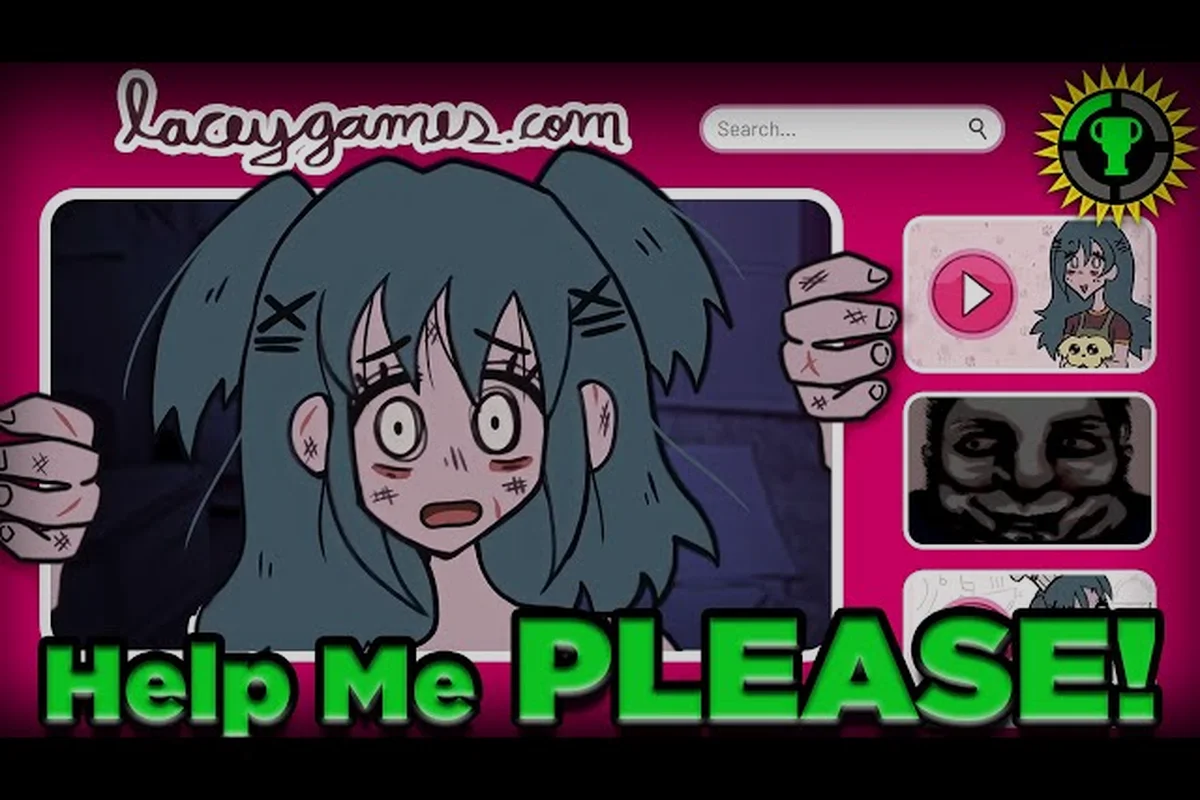
Lacey's Flash Games is a horror-tinged browser throwback that hides something genuinely unsettling behind a cheerful minigame shell, and this review breaks down whether that trick still lands. If you are deciding where your money and evening go, the short answer is that the game is memorable, weird, and shorter than you might expect.
The Full Scope of This Review
The pitch sounds simple: a collection of colorful flash-style minigames hosted by a smiling character named Lacey. What you actually get is a slow-burn horror experience where each minigame hides a layer of dread, and the tone shifts from nostalgic to disturbing without ever announcing the turn. That contrast is the entire hook, and it is the reason so many players walk away with strong opinions.
This Lacey's Flash Games review focuses on what matters when you are about to spend money: how the humor lands, how the horror escalates, how long the content lasts, and whether the asking price matches the experience. Community reports and player experience shape most of the observations below, since the game leans heavily on word of mouth rather than a big marketing push.
-
Tone: cheerful presentation that gradually curdles into unease
-
Structure: short minigame rounds tied together by a framing narrative
-
Length: compact, with most players finishing in a single sitting
-
Replay hook: alternate outcomes and hidden details reward a second pass
-
Best for: players who enjoy unsettling atmosphere over jump-scare spam
If you are weighing a purchase against a free trial, the demo comparison breakdown walks through exactly what the trial includes and where it stops. That matters because the first impression of this game is very different from its final act.
First Impressions Versus the Full Experience
The opening minutes feel almost too innocent. Bright colors, simple controls, and a host who seems genuinely happy to see you. Players who bounce in the first ten minutes often assume it is a cute nostalgia piece and move on, which is a shame because the real design work starts once the cracks appear. According to community discussion, the moment most people realize something is wrong is the same moment they decide to keep playing.
Story and Atmosphere: The Real Selling Point
The narrative is deliberately thin on exposition and heavy on implication. Lacey talks to you like an old friend, but small details in the environment contradict her cheerfulness, and the game never explains more than it needs to. That restraint is what makes the atmosphere work, because your imagination fills the gaps far more effectively than any cutscene could.
Horror here is built from repetition and wrongness rather than gore. A minigame that feels fine on the first run feels subtly off on the third, and the game is patient enough to let that discomfort build. Players who want constant scares may find it slow, while players who enjoy lingering dread tend to rate it highly.
| Element | How It Plays | Player Reaction |
|---|---|---|
| Framing narrative | Lacey hosts, comments, and reacts | Charming at first, unsettling later |
| Minigame variety | Several distinct short games | Fun, but some repeat |
| Horror pacing | Slow escalation across rounds | Divisive — patience required |
| Visual style | Bright flash-era aesthetic | Strong nostalgic pull |
| Audio design | Cheerful loops that distort | Frequently cited highlight |
The audio deserves special mention. Cheerful music that slowly degrades is a classic horror technique, and it is executed here with real care. Several user reviews single out the sound design as the thing that stayed with them after the credits, which is a strong signal for a game this small.
Why the Humor and Horror Coexist So Well
The comedy is not separate from the scares; it is the delivery system for them. Lacey's upbeat commentary makes the darker moments land harder because you were laughing a second before. That blend is difficult to pull off, and it is the main reason the game has generated so much discussion relative to its size. If you want a deeper dive into the unsettling side specifically, the disturbing content analysis covers the moments that hit hardest.
Gameplay and Minigame Design
Mechanically, this is a collection of small skill games rather than one deep system. Each minigame has simple rules, quick rounds, and a clear win condition, which keeps the pace brisk and prevents any single activity from wearing out its welcome. The trade-off is depth: none of these games would hold up as a standalone release, and they are not meant to.
What elevates the design is context. A minigame is fun on its own, then becomes tense once you understand what winning actually costs. The game repeatedly asks you to keep playing a cheerful activity while the framing around it grows darker, and that tension is the actual mechanic.
| Minigame Type | Difficulty | Round Length | Standout Quality |
|---|---|---|---|
| Reflex-based challenges | Low to moderate | Under a minute | Immediate, easy to learn |
| Memory and pattern games | Moderate | One to two minutes | Rewards attention to detail |
| Timing challenges | Moderate to high | Under a minute | Most tense of the set |
| Story-gated segments | Varies | Longer | Carries the narrative weight |
Difficulty is generally forgiving, and failure rarely punishes you harshly, which keeps the experience accessible. Players looking for a stiff challenge should temper expectations, since the game is more interested in mood than mastery. A dedicated difficulty and replay breakdown explains how the pacing shifts across a full run.
Controls and Accessibility
Controls are simple and responsive, matching the browser-game inspiration almost exactly. Keyboard and mouse input both work cleanly, and there is no complex menu diving to slow you down. The low barrier to entry is a genuine strength, because it lets the atmosphere do the work instead of asking you to learn a system first.
Length, Replay Value, and Price
This is where expectations need calibrating. The game is short, and most players report finishing the main content in a single evening. Whether that is a problem depends entirely on what you paid and what you wanted. As a tight, memorable experience it delivers; as a long-term timesink it does not.
Replay value comes from two places: alternate outcomes and hidden details you missed the first time. A second run is noticeably different because you now notice the foreshadowing, and some players report that the second pass is actually the better one. That said, the replay loop is not endless, and anyone expecting dozens of hours should look elsewhere.
| Factor | Assessment | Notes |
|---|---|---|
| Main content length | Short | Finishable in one sitting |
| Replay incentive | Moderate | Alternate outcomes, hidden details |
| Price-to-length ratio | Fair at full price, strong on sale | Depends on your budget |
| Long-term retention | Low | Not a daily-return game |
If cost is your main concern, the worth buying analysis breaks down the price against playtime in more detail. The honest summary is that this is a "one great evening" game, and that framing helps you decide whether the price feels right.
Is It Good? The Honest Verdict
So, is Lacey's Flash Games good? For the right player, yes, and quite memorably so. The atmosphere, sound design, and tonal tightrope walk are genuinely well executed, and the game understands exactly how long its trick can hold your attention. It does not overstay, which is a compliment many larger horror games cannot earn.
For the wrong player, it will feel slight. If you need deep mechanics, a long campaign, or constant scares, the deliberate pacing and simple minigames will frustrate you. The game is best approached as a short, strange experience rather than a content-rich title, and judging it on that basis is fairer to what it is trying to do.
-
Strong points: atmosphere, audio, tonal contrast, tight pacing
-
Weak points: short length, limited mechanical depth, divisive slow build
-
Ideal player: horror fans who value mood over mechanics
-
Poor fit for: players wanting long campaigns or heavy challenge
How Player Ratings Compare to the Hype
Community sentiment skews positive but not unanimous, which is typical for a game built on a single strong idea. Enthusiastic user reviews tend to praise the atmosphere and the ending, while critical ones focus on length and simplicity. Both camps are describing the same design choices from different angles, and neither is wrong.
Final Thoughts on Lacey's Flash Games
This Lacey's Flash Games review lands on a clear position: it is a small, confident horror experience that earns its reputation through atmosphere rather than scale. The cheerful minigames, the deteriorating audio, and Lacey's unsettling warmth combine into something that lingers longer than its runtime suggests. Go in expecting a short, strange evening and it will deliver; go in expecting a sprawling horror epic and it will not.
Frequently Asked Questions
Is Lacey's Flash Games actually scary?
It leans on creeping dread rather than jump scares, so reactions vary. Players who enjoy slow-burn atmosphere often find it genuinely unsettling, while those who want constant shocks may find it tame. The audio design and tonal shifts do most of the heavy lifting.
How long does it take to finish?
A single playthrough of Lacey's Flash Games runs roughly 90 minutes to two hours, so most players clear the main content in one evening session rather than spreading it across a week. The replay value is deliberately front-loaded into interpretation rather than volume: a second pass through the same flash-game framing device surfaces alternate outcomes and hidden details — foreshadowed lines in the chat-log segments, small environmental changes between chapters — that reframe earlier scenes instead of adding new levels. Because the game never pads its runtime with filler puzzles, treat it as a short but dense experience where a repeat run costs little and rewards close attention to the details you skimmed the first time.
Is Lacey's Flash Games worth the price?
At full price it is a fair value for a tight, memorable horror experience; on sale it becomes an easy recommendation. Weigh that against the roughly 90-minute to two-hour runtime: the asking price works out to a modest per-hour cost for a single pass, and the second-playthrough foreshadowing effectively doubles the value without adding new content. Anyone expecting a long campaign should wait for a discount before buying, since the flash-game framing device and chat-log segments are designed to be re-read rather than stretched across dozens of hours.
Does it have replay value?
Yes, but modest. A second run reveals foreshadowing and alternate outcomes you missed initially — a chat-log line that reads as flavor text on pass one becomes a plain warning once you know the ending, and at least one chapter's background art quietly changes to match the outcome you didn't get. Some players prefer the second pass for exactly this reframing. It is not designed for endless replay, though: there are no unlockable modes, no difficulty tiers, and no branching level select, so the ceiling is roughly two focused runs before the returns flatten out.
Is the game good for players new to horror?
It is a reasonable entry point because it avoids gore entirely and relies on mood, though the unsettling tone may still be intense for some. The scares come from the chat-log segments and audio cues rather than graphic imagery, so players sensitive to psychological dread should check community impressions first — Steam user reviews and forum threads are the fastest way to gauge whether the flash-game framing device's creeping atmosphere sits within your tolerance before committing to the 90-minute runtime.