
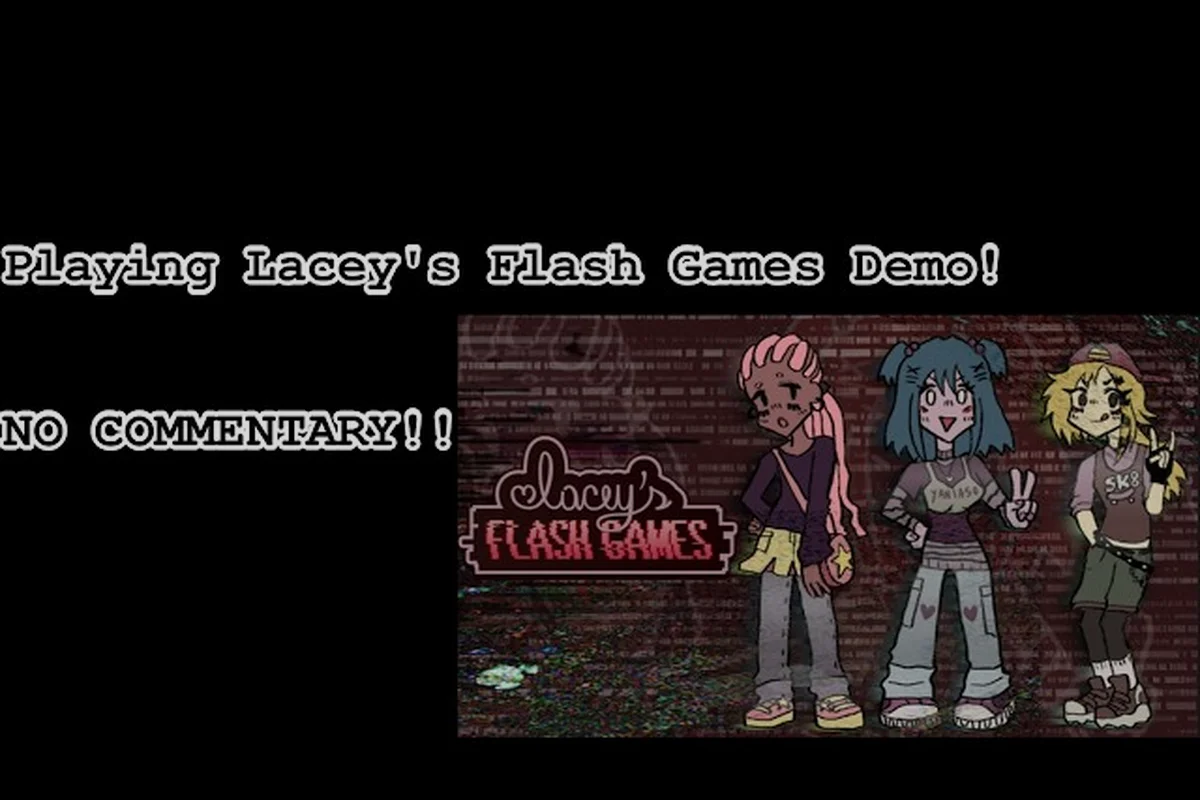
Lacey's Flash Games endings matter because several mini-games react to your choices, and replaying them can reveal routes that a first playthrough misses. This guide maps the documented branches, including the wardrobe choice, the favorable conclusion, the harmful alternative, and the ending variations connected to Lacey's surrounding games.
How Lacey's Flash Games Endings Are Organized
The collection is easier to understand when you separate its endings into two layers: the distinct conclusion reached inside a mini-game and the larger story reaction that follows. A Wardrobe run, for example, can end on a specific threat-driven outcome, while a separate route produces a more favorable conclusion. Other activities use similar branching logic, so the full list depends on both the activity played and the decision made near its conclusion.
Community documentation for Lacey's Wardrobe endings on Steam identifies the third dress-up at night as the key branch point. At that point, the stalker calls and knocks on the door, and the response chosen during that encounter determines which sequence follows. This makes Wardrobe unusually important when cataloging Lacey's Flash Games all endings because the same sequence continues differently based on the player's response.
| Layer | What it determines | Example | Why it matters |
|---|---|---|---|
| Minigame route | The outcome inside an activity | Wardrobe's third nighttime dress-up | Establishes the immediate branch |
| Final decision | Whether the route ends favorably or harmfully | Answering or refusing the stalker | Changes the conclusion |
| Collection context | Lacey's broader situation | How the collection frames the result | Adds meaning to the ending |
| Replay record | Which branches have been viewed | Saved ending checklist | Prevents repeated route confusion |
The nighttime third-dress-up trigger is the best documented Wardrobe branch. Players who want every ending should record the exact prompt and response rather than relying only on the final screen, because several apparently similar runs may not pass through the same trigger. That same discipline helps when reviewing the interface guide, since prompts and indicators can be easy to overlook during quick replays.
Distinguishing activities from standalone conclusions
Not every activity behaves like a compact branching story. Some present a fixed ending after a completed sequence, while others add a late choice that redirects the result. In a practical guide to Lacey's Flash Games every ending, label each result by its source activity before deciding whether it is genuinely new.
| Ending source | Branching style | Recommended labeling |
|---|---|---|
| Wardrobe | Clear late choice with distinct branches | Wardrobe favorable route; Wardrobe harmful route |
| Love Meter | Repeated choices accumulate into a result | Love Meter favorable result; Love Meter harmful result |
| Petshop | Activity-specific completion sequence | Petshop ending |
| Diner | Performance and interaction route | Diner ending |
| Skating | Completion-based activity result | Skating ending |
| Halloween | Seasonal branch context | Halloween ending |
The distinction prevents a common collection mistake: treating every conclusion animation as a separate narrative ending when some belong to the same branch family. The mini-games overview can help you identify which activities contribute distinct outcomes, while the ending list should remain focused on conclusions rather than merely listing gameplay modes.
Choosing the Lacey's Flash Games Good Ending
The favorable route depends on making decisions that preserve Lacey's control and prevent the threatening event from taking over. In Wardrobe, the relevant sequence begins with the third dress-up at night. When the stalker calls and knocks, the player must recognize that this moment is the branch trigger and select the response that keeps Lacey's situation stable rather than surrendering control.
The Wardrobe community guide describes the knock and call as the decisive encounter. Based on that documented trigger, the reliable method for obtaining Lacey's Flash Games good ending is to reach that third nighttime dress-up, pause at the prompt, and make the non-harmful choice. Players who discover the branch only after several failed attempts can also consult the prologue and replay guide to refresh the opening setup and reduce wasted progression.
| Run goal | Required action | Checkpoint | Common mistake |
|---|---|---|---|
| Reach Wardrobe's key branch | Complete the third nighttime dress-up | Save immediately before the knock | Treating it as an ordinary clothing step |
| Preserve the favorable route | Select the response that avoids the harmful outcome | Record the selected response | Choosing by appearance rather than consequence |
| Verify the result | Read the conclusion screen carefully | Note the ending name and image | Assuming every completed Wardrobe run is identical |
| Continue collection | Return to the relevant activity | Compare against the ending checklist | Forgetting which branch was already viewed |
Why the harmless-looking prompts matter
Interactive fiction often makes the consequential choice sound like ordinary dialogue, but Wardrobe places that choice inside a recognizable sequence. The caller and the knock provide a clear audio or narrative signal, so players should listen for the encounter instead of relying only on the clothing visuals. The third nighttime dress-up is more useful as a landmark than a generic “late choice” description because it tells you exactly when to reload if a misclick sends the run down the wrong route.
Some players also report that a favorable result can feel underwhelming because the ending presents itself as a relatively calm resolution. That reaction does not make it a secret or hidden variant. It simply means the positive consequence may depend on quieter evidence rather than a dramatic celebration. When comparing candidates for Lacey's Flash Games good ending, judge the visible aftermath and the decisions that produced it, not the volume of the final animation.
Replay discipline for the favorable route
A clean run should begin with one confirmed attempt at the trigger. Once the prompt appears, make the intended selection deliberately, then let the sequence finish without interrupting it. If the result differs, return to the last stable point and reproduce the same decision rather than replaying the entire game from the opening.
For each retry, use a consistent four-item checkpoint: the third nighttime dress-up, the caller and door knock, the selected response, and the final Wardrobe ending. Compare the ending screen with the favorable Wardrobe entry before continuing, because a completed run can still produce the wrong branch if the earlier response was mistimed. Recording the choice immediately makes it possible to identify the exact point of divergence and correct only that decision instead of replaying every earlier dress-up sequence.
-
Trigger confirmed: The third nighttime dress-up has begun.
-
Stalker alert recognized: The caller and door knock have occurred.
-
Choice recorded: The selected response is written down immediately.
-
Ending confirmed: The resulting conclusion is compared with the favorable Wardrobe entry.
-
Duplicate ruled out: The ending screen and route notes match a previously seen branch.
This process is more efficient than random experimentation because Wardrobe contains a defined branch point rather than a long chain of small decisions. If you want visual confirmation of the full run, Nocom's no-commentary endings video provides another way to compare the sequence before returning to the game.
Reaching the Lacey's Flash Games Bad Ending
The harmful outcome follows from a different response at the same critical Wardrobe encounter. Once the stalker calls and knocks during the third nighttime dress-up, the player can choose the response that lets the threatening situation control the sequence. Completing that branch produces the bad ending associated with Wardrobe.
Because the two major Wardrobe outcomes share the same approach, this route is ideal for controlled comparisons. Save before the third nighttime dress-up, attempt the harmful response, confirm its ending, and then reload for the favorable response. You do not need to search for a separate doorway, collectible, or hidden menu when the only changed input is the answer to the knock.
| Compare | Shared setup | Different input | Result |
|---|---|---|---|
| Favorable Wardrobe route | Complete first two nighttime stages, then reach dress-up three | Choose the response associated with the better outcome | Calm or positive conclusion |
| Harmful Wardrobe route | Use the same save point | Choose the response associated with the stalker | Bad ending |
| Both routes | Finish the resulting sequence | No additional hidden prompt | Each conclusion reaches its screen |
Distinguishing a bad ending from an unfinished run
Some players report feeling as though they found the bad ending when a sequence simply stops or produces an abrupt joke. The distinction matters because not every interrupted animation is a valid conclusion. To confirm Lacey's Flash Games bad ending, look for a complete final presentation with a clear closing state rather than assuming that any unsettling event qualifies.
A valid check includes a finished bad-ending sequence, not merely the stalker appearing or the third nighttime dress-up being reached: the call-and-knock prompt must trigger a harmful choice, its consequences must continue to a clear final state, and the game must record that branch separately from the good ending. This distinction matters because an abrupt interruption can look ominous without constituting a confirmed bad ending.
-
The third nighttime dress-up was reached.
-
The stalker’s call and knock initiated the decision.
-
The harmful option was selected.
-
The sequence continued to a finished conclusion.
-
The ending was logged separately from the favorable branch.
Because shared setup matters more than obscure unlock conditions, save-state experimentation is especially effective. If the menu or progression rules are unfamiliar, the ending requirements checklist can help organize what must be confirmed after the playthrough.
Why the bad route still belongs in a full collection
A completion list should include unfavorable outcomes because their existence proves that the player recognized meaningful agency at the branch. It also provides a clean comparison point: the same stalker encounter and the same clothing sequence produce sharply different consequences depending on one response.
That comparison makes the endings more informative than isolated clips. It also helps with route verification: if the favorable route appears identical to the harmful one, replay the exact branch point and record every input. If the two endings look distinct, label them by the choice that separated them.
Counting Lacey's Flash Games How Many Endings Correctly
There is no single verified universal count that can be safely applied to every activity and collection context. The number depends on whether a player counts only major narrative conclusions, includes activity-specific endings, or treats each alternate response and final variation as a separate entry. This is why questions about Lacey's Flash Games how many endings exist can produce conflicting answers among players.
The dependable method is to define the counting rules before checking progress. For a practical collection, count each visually distinct final conclusion once, while grouping repeated animations that belong to the same choice sequence. Also record whether the result belongs to Wardrobe, Love Meter, Petshop, Diner, Skating, Halloween, or another activity. That produces a personal total grounded in the actual game rather than an unverified internet claim.
| Counting method | What gets counted | Likely result | Best use |
|---|---|---|---|
| Major endings only | Clearly different final narratives | Smallest total | Comparing principal conclusions |
| Activity endings | One distinct conclusion per activity | Moderate total | Tracking the collection's scope |
| Branch variants | Each different choice result | Larger total | Full completion planning |
| Route-level count | Every separate choice path | Largest total | Replay-heavy players |
| Duplicate animations | Same result reached through different inputs | Usually inaccurate | Avoiding completion inflation |
A defensible ending count
For most players, activity plus final branch is the clearest unit. Wardrobe's favorable and harmful responses count as two results, while an activity with one conclusive completion counts as one. If another game in the series supplies a reaction or cover sequence, record it separately because it changes the presentation of Lacey's broader fate.
A useful personal tally can include the following fields: the specific activity, the trigger that unlocks its branch, the player choice made, the resulting conclusion, and whether that ending has been verified. This makes the tally reproducible rather than a vague count; for example, a Wardrobe outcome can be logged with its nighttime dress-up trigger and favorable response. Keep cross-game reaction or cover sequences in separate entries, and mark unresolved branches as unverified until their conditions are confirmed.
| Field | Example |
|---|---|
| Activity | Wardrobe |
| Branch trigger | Third nighttime dress-up |
| Player decision | Favorable response |
| Conclusion | Calm ending |
| Status | Seen |
| Verification source | Own playthrough record |
Handling claims from community lists
Community lists often combine data from the original Flash-era games, later minigames, and the modern collection presentation. Those categories may use similar visuals while belonging to different releases. A player forum can still help identify overlooked activities, but the count should be verified against the version currently available.
The "ALL ENDINGS guide for Lacey's Wardrobe" on Steam is a solid example of a source that states its scope clearly. It focuses on Wardrobe instead of presenting an unsupported total for the entire series. When a broader claim is encountered, ask whether the author counted only Wardrobe, the whole Flash collection, or an expanded edition.
Why online totals differ
Different totals often arise from four simple classification errors, especially when counting Lacey's Flash Games endings across multiple playthroughs: one route’s mini-game result may be treated as a separate story ending, while the same duplicate animation can be logged again after switching routes. Counts also change when a reaction scene is added even though it does not replace the original ending, or when a platform-specific version contributes an ending without being identified in the notes. Compare the ending’s trigger, route, and final animation—not merely whether the scene appears after the last choice—to decide which entries should be included in the total.
-
A mini-game result is counted as a separate story ending.
-
A duplicate animation is counted again after a different route.
-
A reaction scene is counted although it does not replace the original ending.
-
A platform-specific version is omitted or included without explanation.
By using dated notes, screenshots, and activity names, you can reconcile those differences. The endings list reference is especially useful for keeping naming consistent while you check each result against your own playthroughs.
Comparing Good and Bad Endings Without Missing Branches
A complete playthrough requires comparing outcomes systematically. Start with the major Wardrobe split because its trigger is documented, then move through activities such as Love Meter, Petshop, Diner, Skating, and Halloween. This order produces a repeatable checklist rather than a vague impression that every possible conclusion has been seen.
| Priority | Activity or branch | Input to verify | Evidence to save |
|---|---|---|---|
| 1 | Wardrobe favorable route | Non-harmful response at the third nighttime dress-up | Ending screen plus route note |
| 2 | Wardrobe harmful route | Harmful response at the same trigger | Ending screen plus route note |
| 3 | Love Meter result | Relevant accumulated choices | Ending identity and choice summary |
| 4 | Petshop result | Activity completion | Ending identity |
| 5 | Diner result | Interaction and completion order | Ending identity |
| 6 | Skating result | Successful completion state | Ending identity |
| 7 | Halloween result | Seasonal branch conditions | Ending identity |
Build the checklist before replaying
Write down each branch condition before performing the test. For Wardrobe, the condition is precise: the third nighttime dress-up, the stalker's call and knock, and a different response at that prompt. For other activities, use the final decision or completion sequence shown during the run. This prevents accidental sequence changes while still letting you explore outcomes.
When tracking route notes, include the activity, trigger, selected response, result, and whether the ending is new. A short recording system catches more omissions than watching many videos without notes because it records what happened, not merely that a video ended.
Verify the branch, then verify the ending
A response is not an ending until its full conclusion has played, so distinguish a dialogue reply from the ending it triggers. In Lacey’s Flash Games, the intended choice may produce a short character response while the scene continues to a complete ending screen; stopping there can leave a good ending or bad ending uncounted. Use the sequence as evidence: confirm that the known trigger was activated, let the final scene and result resolve, then compare the displayed ending with the ending log before recording it.
| Verification stage | Question to answer | Yes or no action |
|---|---|---|
| Route | Did I make the intended choice at the known trigger? | Reset to the save point if no |
| Presentation | Did the sequence reach a complete ending screen? | Continue until the result resolves |
| Identity | Does the final image and scenario match the logged ending? | Add it to the checklist |
| Coverage | Has this activity-branch pair already been seen? | Mark it as duplicate or new |
Check for ending-screen ambiguity
Some final screens may look similar at a glance because they reuse a general background or animation. Zooming in on character expressions, screen text, and the final image can reveal the difference. If two outcomes still appear identical, compare their route notes before adding them as separate entries. For a broader view of presentation and completion behavior, the ending achievement guide can provide a useful second check. The goal is not merely to trigger a screen, but to prove that every activity-branch combination has been documented.
A Reliable Order for Unlocking Every Ending
The most efficient ending hunt uses Wardrobe as the anchor because its major branch is known, then groups the remaining activities by how they unlock. Start each session with a clear objective, use saves where available, and stop after confirming a new conclusion. Short, controlled sessions reduce accidental route changes and make it easier to recognize newly discovered material.
| Session | Objective | Expected progress |
|---|---|---|
| 1 | Reach Wardrobe's third nighttime dress-up | Establish the shared branch save |
| 2 | Complete both Wardrobe responses | Add the favorable and harmful results |
| 3 | Finish each short activity once | Cover straightforward activity endings |
| 4 | Revisit activities with choice-dependent endings | Capture alternate branches |
| 5 | Compare the personal list with guides | Correct naming and identify omissions |
Before the run
Prepare by closing unrelated pages and writing down the exact branch target. If you are working on Wardrobe, say the key condition aloud: complete the third nighttime dress-up at night and wait for the stalker’s call and knock. This simple repetition makes it less likely to treat the encounter as an ordinary scene.
Check that the game is fully playable, your notes are open, and you know where the save or restart control is. The aim is to create a controlled test environment, because branching exploration becomes confusing when unrelated choices or interrupted prompts remain mixed into the same session.
During the run
Play steadily until the recorded trigger arrives. At a decision point, pause, confirm the prompt, select one branch, and avoid experimenting unless you intentionally create a separate route note. Let the entire ending play, then write down the outcome before restarting.
For a favorable test, save the route before the harmful comparison. After the favorable result is confirmed, reload and choose the harmful response at the same point. In practice, this produces cleaner data than attempting to remember which choices were different after a full blind playthrough.
After the run
Compare the result against your list, but do not rely on memory alone. Update the entry immediately and mark the primary branch or alternate branch status. If the result appears new, capture a screenshot of the final state; if it matches an existing result, check whether the route notes explain the duplication.
| Result | Required action |
|---|---|
| New ending | Add activity, trigger, response, and screenshot |
| Known ending reached through another route | Keep one primary entry and note the alternate route |
| Unclear ending | Compare images, text, and route notes |
| No ending reached | Reset before the branch and retry the intended input |
Final audit
An audit should answer three concrete questions: Which activity-branch pairs have a verified ending? Which endings are known from the community but still missing from your run? Which claims depend on a different game version? Do not mark an ending as complete until all three answers are clear.
The complete collection of Lacey's Flash Games all endings is less about memorizing isolated videos and more about controlling branch points. Wardrobe's third nighttime dress-up provides a dependable starting point, while activity-specific conclusions complete the larger checklist. By recording the trigger, the response, and the resulting screen each time, players can distinguish true new conclusions from duplicates and understand how Lacey's fate changes.
Frequently Asked Questions
What is the best ending in Lacey's Flash Games?
The Wardrobe's favorable outcome is the clearest candidate because its trigger and branch response are well documented. Reaching the third nighttime dress-up and making the safer choice leads to a positive conclusion. Whether another activity's conclusion offers a more emotionally rewarding result depends on personal preference, so compare each ending's outcome rather than relying on a single community ranking.
How can players get the good ending in Lacey's Flash Games?
In Wardrobe, progress to the third nighttime dress-up and listen for the stalker's call and knock. That encounter is the documented branch point, so select the response associated with the favorable outcome and allow the sequence to finish. Save before this moment if possible, then verify the resulting ending screen against your notes.
What choice produces the bad ending in Lacey's Flash Games?
The harmful Wardrobe route begins at the same third nighttime dress-up where the stalker calls and knocks. Choosing the response that lets the threatening situation take control sends the game toward the bad ending. Because the setup is shared, you can compare both conclusions efficiently by saving before the prompt and changing only that response.
Are all the activity finales separate endings?
Not necessarily. Some activities contribute a distinct conclusion, while others may present alternate branches that return to a related presentation. Count visually distinct final results and record the activity and branch condition for each one. This avoids treating duplicate animations as separate endings while preserving genuine choice-based outcomes.
How many endings can be collected in Lacey's Flash Games?
The total depends on the counting method, release, and whether you include activity finales, branch variants, and reaction scenes. No universally applicable total should be assumed without those qualifiers. Build a list using activity plus branch condition as the unit, then reconcile it against your game version and the community references you use.